Math is Easy. The Behavior is Hard. If financial success depended only on mathematics, economists would hold the keys to universal wealth.
The truth is far more nuanced: while the simple equations of finance are clear, the reality for most people remains chaotic.
Currently, a significant portion of the population reports living paycheck to paycheck and worrying daily about personal finances. These figures confirm that financial struggles are not isolated incidents but a systemic crisis rooted in behavioral and psychological friction.
The journey to financial security, therefore, does not begin with the latest stock market trend or a high-yield savings application. It starts with a confrontation—a deep analysis of the deeply ingrained habits, emotional reflexes, and skewed incentives that govern personal spending and saving.
While finance is overwhelmingly taught as a numbers-based field, the real levers of wealth creation are the “soft skills”—the ability to manage one’s own behavior, ego, pride, and personal history.
This profound disconnection between technical knowledge and practical outcomes is why so many struggle. The goal is to move past the simple equations and address the foundational human problems first.
This is exactly why I’ve compiled this list of the 10 best personal finance books that will change how you think about money.
These highly-rated texts systematically deconstruct and rebuild a healthy relationship with money. They provide the essential, verified framework for transformation, moving readers from managing fear and debt to constructing automated wealth systems and defining a purpose-driven life.
This curated list is structured to guide you through three crucial phases of financial maturation: mastering the inner behavioral game, executing the tactical playbook, and finally, adopting a life-affirming wealth philosophy.
Contents
Quick Reference: The Essential Personal Finance Reading List
Quick Reference: The 10 Life-Changing Financial Books
| Book Title (Author) | Core Financial Philosophy | Key Mindset Shift | Amazon Rating |
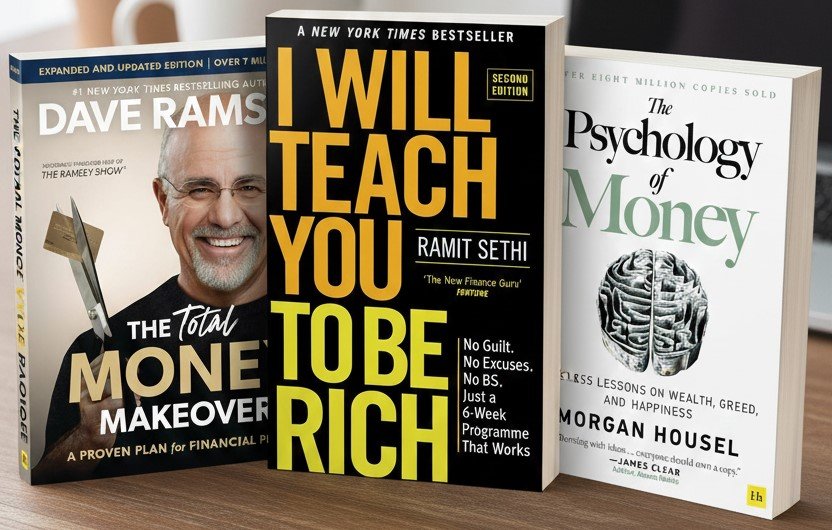
| The Psychology of Money (Morgan Housel) | Behavioral Finance & Risk Management | Understanding that successful financial outcomes are 80% behavior, not intelligence. | 4.7+ |
| Rich Dad Poor Dad (Robert T. Kiyosaki) | Asset Acquisition & Financial Education | Recognizing the difference between income-generating assets and debt-laden liabilities. | 4.7+ |
| I Will Teach You to Be Rich (Ramit Sethi) | Automation & Conscious Spending | Designing a “Conscious Spending Plan” to automate savings, then spending guilt-free. | 4.6+ |
| The Simple Path To Wealth (J. L. Collins) | Index Fund Investing & FI | Simplicity is key; the path to wealth avoids complexity and high fees. | 3.4+ |
| Your Money or Your Life (Vicki Robin) | Financial Independence & Purpose | Valuing money in terms of “Life Energy” (hours worked) to define enough. | 4.5+ |
| The Total Money Makeover (Dave Ramsey) | Debt Elimination & Budgeting | Employing the Debt Snowball for psychological momentum to achieve total debt freedom. | 4.7+ |
| The Millionaire Next Door (Stanley/Danko) | Consumption Control & Net Worth | The wealthy prioritize accumulation over visible consumption (low consumption = high net worth). | 4.6+ |
| The Richest Man in Babylon (George S. Clason) | Foundational Saving & Investing | The ancient, timeless rule: Pay yourself first by setting aside 10% of all you earn. | 4.4+ |
| Die with Zero (Bill Perkins) | Experiential Spending & Timing | Maximizing life experiences by timing spending to match health and energy levels. | 4.4+ |
| Think and Grow Rich (Napoleon Hill) | Personal Development & Mindset | Transforming a “burning desire” into specific, organized plans for monetary achievement. | 4.4+ |
Section I: The Behavioral Core—Mastering the Inner Game of Money (Books 1-3)
True financial transformation requires readers to address the deep, often irrational, biases that sabotage financial goals. These first three books attack the core emotional drivers of spending and saving, establishing the necessary mental foundation before any spreadsheet or budget can succeed.
1. The Psychology of Money by Morgan Housel
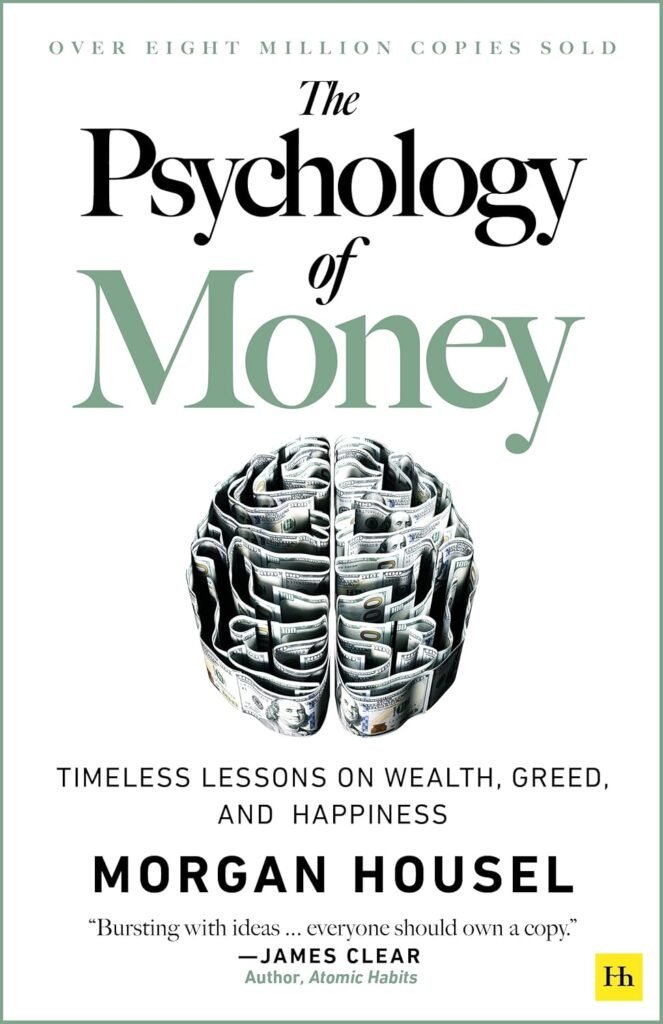
Morgan Housel’s work stands out because it treats finance not as an academic discipline but as a study of human temperament. Housel delivers 19 short stories that demonstrate how financial decisions in the real world are often shaped by messy, emotional factors rather than tidy spreadsheets.
The primary enemies of wealth are frequently internal: ego, pride, and especially envy. When individuals fail to define enough, they enter a perpetual state of striving fueled by comparison.
This striving undermines even the most robust financial plan, creating perpetual dissatisfaction, echoing the ancient wisdom that, “It is not the man who has too little, but the man who craves more, that is poor”.
The book establishes the foundational understanding that personal history and unique worldviews create strange ways of thinking about money, overriding purely rational financial calculations.
A critical concept Housel introduces is the interconnected nature of luck and risk, describing them as “siblings”. This framework forces readers to acknowledge that some outcomes in life are guided by forces entirely outside of individual effort and genius.
The acceptance of this reality—that success is not solely a meritocracy—is vital for developing financial humility. Humility protects investors from overconfidence when markets surge and prevents excessive shame or panic when markets inevitably retract.
Housel argues that this behavioral discipline, centered on controlling what an individual can control (saving rate, patience, and risk tolerance), is far more important for long-term survival than attempting to predict or time market fluctuations.
This psychological survival skill becomes the paramount driver of sustained success, far outweighing technical sophistication.
2. Think and Grow Rich by Napoleon Hill
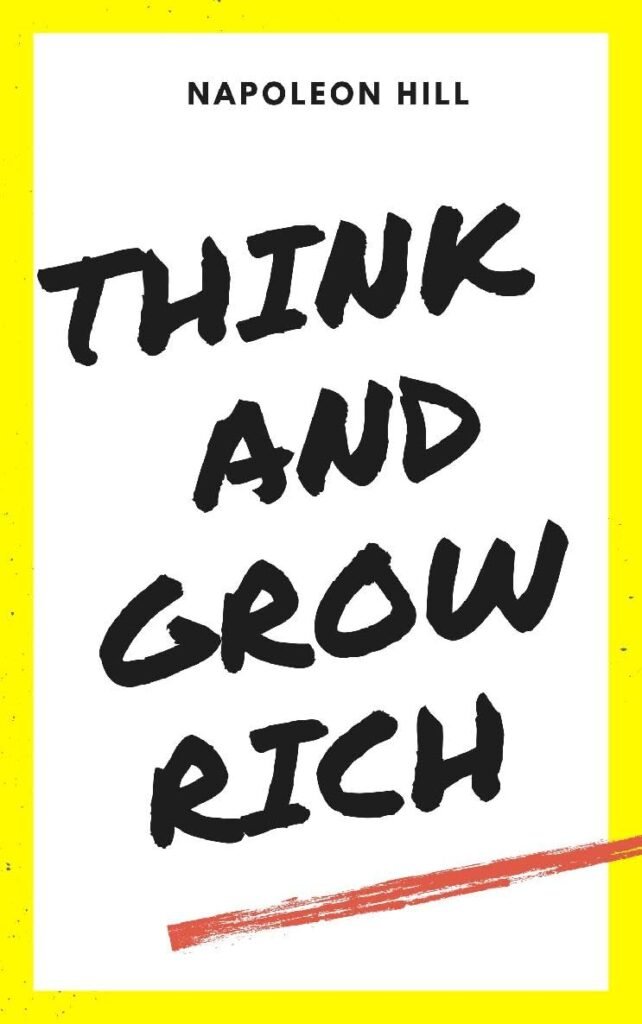
Napoleon Hill’s groundbreaking text, often cited as the “Granddaddy of All Motivational Literature,” asserts that monetary achievement begins exclusively in the mind.
Hill provides a plan and principles for transforming abstract desires into tangible riches through 13 steps. The process starts not with a budget, but with cultivating a “burning desire” for a definite financial goal.
This desire must be so specific and intense that it moves past the realm of wishful thinking and becomes the driving force behind all subsequent actions. This process involves the conscious use of visualization and affirmation (Autosuggestion) to imprint the clear objective—the exact amount of money and the timeline for its acquisition—onto the subconscious mind.
Hill emphasizes that working alone is often insufficient for achieving extraordinary wealth. The necessity of forming or joining a “Master Mind” group is a core principle.
This collective provides not just accountability but also a specialized reservoir of knowledge and diverse imagination. Wealth accumulation is defined as a collaborative endeavor, using combined intellectual power to solve complex problems and create practical, organized plans for wealth acquisition.
The book demonstrates that the first crucial step in any successful financial endeavor is the foundational belief that success is achievable, transforming vague hopes into focused, executable strategies.
3. The Richest Man in Babylon by George S. Clason
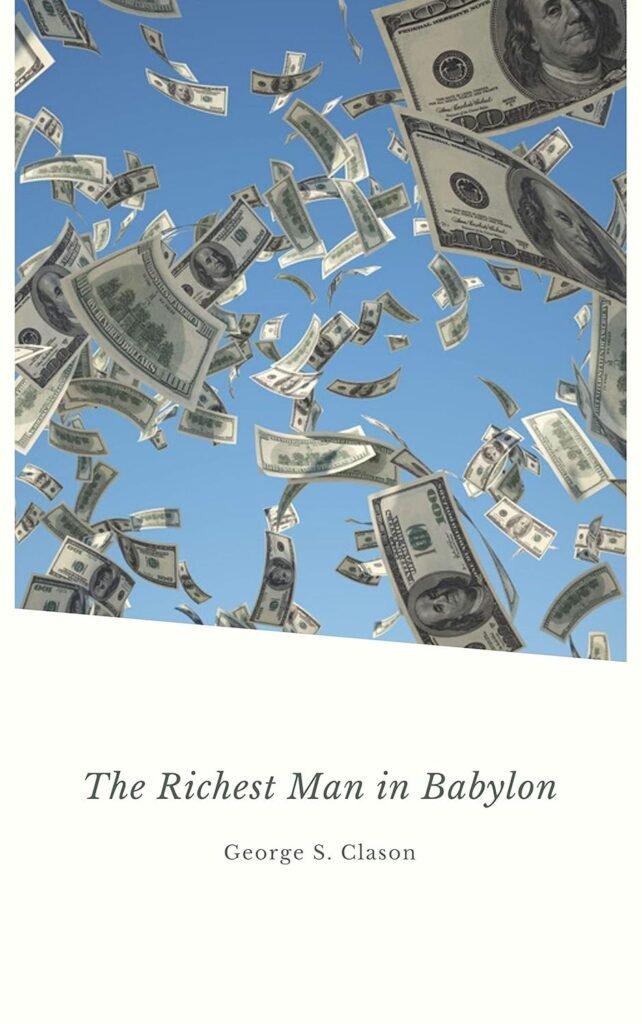
George S. Clason delivers timeless principles of financial management through a collection of Babylonian parables. Despite being nearly 100 years old, the wisdom remains profoundly relevant today.
The central pillar of the book is the “Seven Cures to a Lean Purse,” with the first cure being universally applicable: the non-negotiable directive to “Pay yourself first” by setting aside 10% of all earnings.
This concept reframes saving from an optional leftover activity to a mandatory, foundational financial law.
Even for individuals deeply entrenched in debt, this initial 10% must be safeguarded to form the seeds of future capital.
Beyond simple saving, the book instructs readers on how to guard their capital and make their money “reproduce,” serving as an ancient analog for modern concepts like compound interest and passive income generation.
Clason’s parables teach diligence in seeking counsel from individuals highly experienced in specific investment fields—an early precursor to the need for specialized knowledge and due diligence advocated by modern experts.
This text provides the emotional justification required for disciplined frugality, positioning the act of saving not as self-sacrifice, but as the active creation of a growing army of future wealth workers, generating returns while the owner sleeps.
Section II: The Tactical Playbook—Automating and Eliminating Financial Friction (Books 4-6)
Once the behavioral foundation is set, the next stage involves implementing automated, friction-free systems that minimize effort and maximize long-term returns.
These three books provide the necessary blueprints for debt elimination, saving automation, and hands-off investing.
4. I Will Teach You to Be Rich by Ramit Sethi
Ramit Sethi offers a practical, modern financial framework that appeals especially to young adults starting their financial journeys.
The cornerstone of his advice is the concept of automation: designing a money flow where income is automatically allocated to retirement accounts, savings goals, and low-cost investments before the remainder hits a general spending account.
This systematic automation eliminates the constant psychological stress and error inherent in manually tracking expenses and trying to budget every transaction. By setting up this system, the reader gains control over their finances with minimal ongoing effort.
Sethi challenges the conventional micro-frugality often preached in personal finance.

Instead of agonizing over a daily coffee purchase, he argues for a “Conscious Spending Plan,” focusing on ruthlessly optimizing high-cost, high-impact items such as negotiating high-interest debt or optimizing housing costs.
By securing massive, one-time wins on the largest expenses, readers free up significant capital, allowing them to spend the remaining money guilt-free on their true passions.
This approach synthesizes the tactical necessity of consistent investment with the psychological need for spending freedom, offering a balanced and sustainable path to financial improvement.
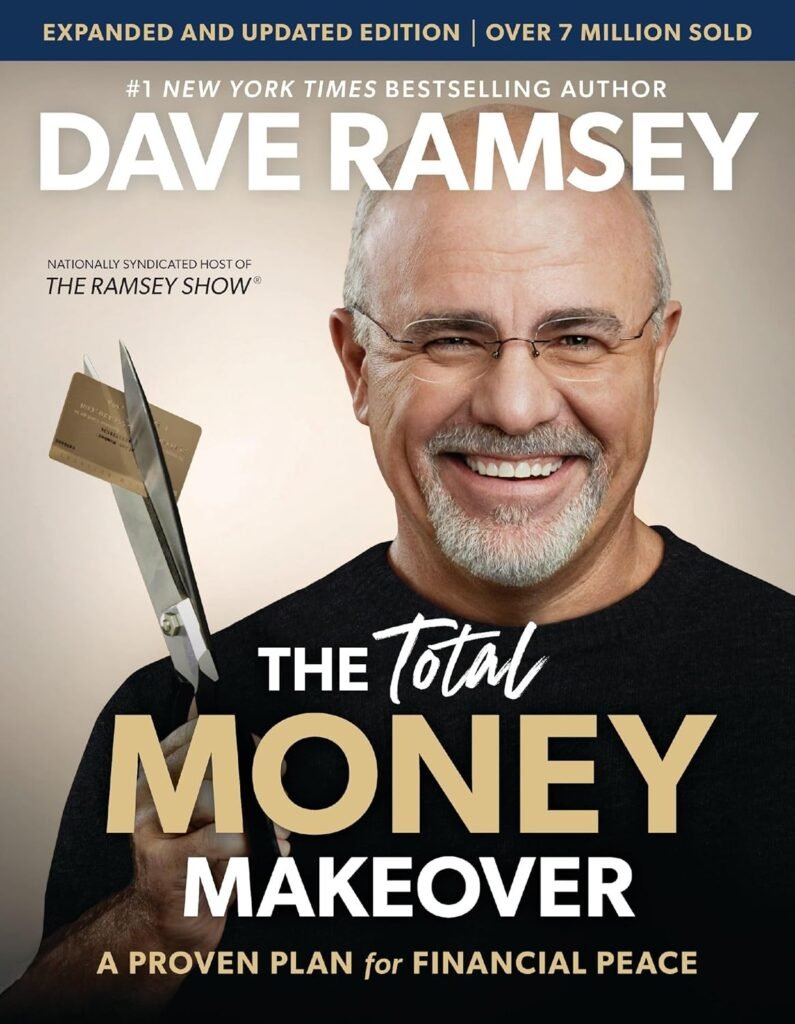
5. The Total Money Makeover by Dave Ramsey
Dave Ramsey’s The Total Money Makeover is designed to provide a clear, simple, and proven plan for those who find money difficult and overwhelming.
The structure is built around the “seven Baby Steps,” a linear sequence designed to provide structure and conviction. The most critical component for debt management is the Debt Snowball method.
This approach prioritizes paying off debts from smallest to largest balance, regardless of the interest rate.
The rationale behind the Debt Snowball is purely psychological: it delivers immediate, motivating wins by allowing the reader to knock out entire debts quickly. This momentum is the “secret sauce” needed to maintain commitment when facing large overall debt burdens.
While the Debt Avalanche method saves more money mathematically by targeting the highest interest rates first, the psychological boost of the Snowball is often more effective in ensuring long-term behavioral compliance and achieving full debt freedom.
Ramsey stresses that the principles taught are the fundamental truths responsible for changing millions of lives.
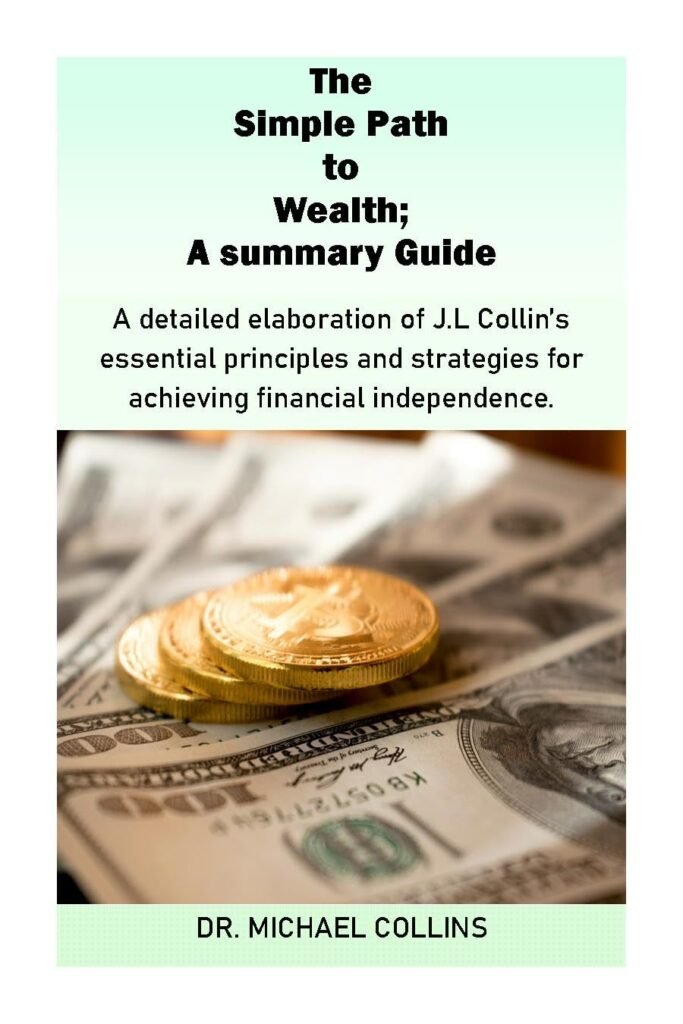
6. The Simple Path To Wealth by J. L. Collins
J. L. Collins’ book provides a direct, accessible roadmap for investing, developed originally through letters to his daughter.
The core philosophy is built on three actionable rules: spend less than you earn, avoid debt, and invest the extra in low-cost index funds.
Collins actively demystifies the investing world, arguing that complexity and high fees are often engineered by the financial industry to extract wealth from the average investor. This text is vital for establishing the investment engine of one’s financial plan.
Collins consistently advocates for the utilization of broad, low-cost index funds, such as VTSAX (Vanguard Total Stock Market Index Fund Admiral Shares), as the simplest and most effective vehicle for long-term wealth creation.
This method ensures that the investor owns a diversified slice of the entire market, securing consistent returns over time while minimizing effort, anxiety, and the erosion of wealth by fees.
This approach serves as the practical, long-term implementation tool for the savings principles laid out by Clason in ‘The Richest Man in Babylon’ and the automation strategies established by Sethi in ‘I Will Teach You to be Rich’
Section III: Challenging Conventional Wisdom—Reframing Assets, Consumption, and Life (Books 7-10)
The final section explores books that fundamentally challenge societal norms regarding work, wealth, and consumption, providing the philosophical context needed to maximize the freedom created by financial systems.
7. Rich Dad Poor Dad by Robert T. Kiyosaki
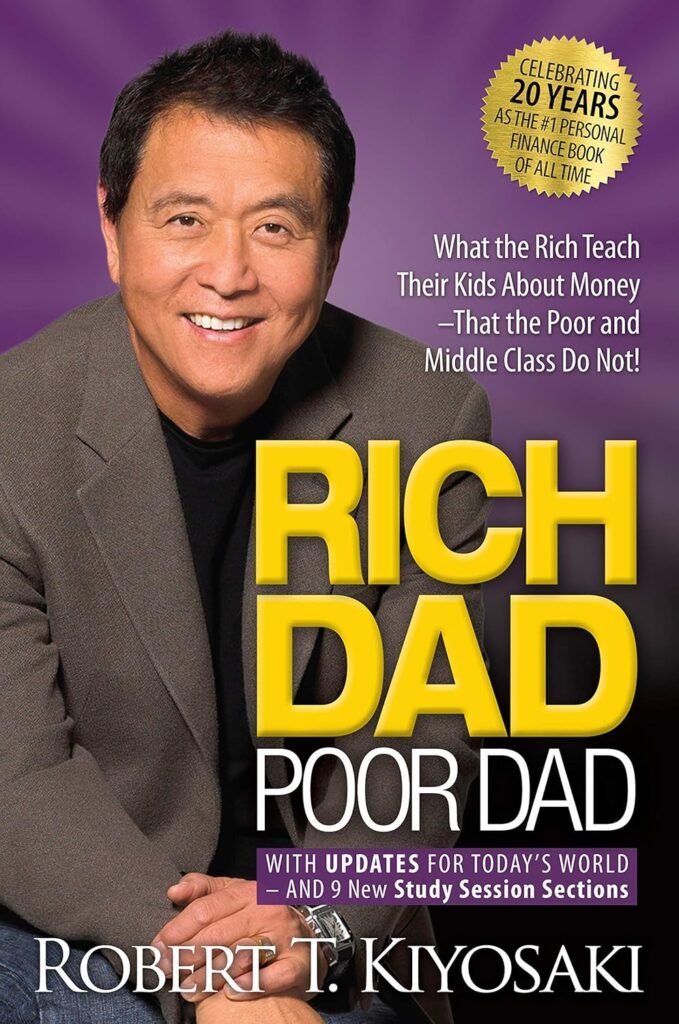
Robert Kiyosaki’s book has catalyzed a crucial mindset shift for countless readers by forcing a radical redefinition of financial terms. Kiyosaki uses the contrasting figures of his two fathers—one highly educated but financially struggling, the other an uneducated entrepreneur who became rich—to illustrate key financial concepts.
The central lesson is the difference between an asset and a liability: an asset puts money into your pocket, while a liability takes money out of your pocket.
This challenges conventional wisdom by arguing that a primary residence, if it generates no income, often functions as a liability. The book advocates for escaping the “rat race” by acquiring income-generating assets (real estate, stocks) and shifting one’s focus from being an employee to an investor and business owner.
While the philosophical shift offered by Rich Dad Poor Dad is powerful, readers must approach the book with critical caution. Critics note that the book oversimplifies complex financial concepts and lacks specific, actionable investment advice.
Furthermore, Kiyosaki’s past advice has included encouraging readers to increase credit card limits, a position he later reportedly admitted was questionable.
Readers should utilize this book for the critical mindset shift—the courage to change career trajectories and acquire assets—but must rely on the practical, low-risk execution strategies found in texts like The Simple Path to Wealth for actual investment mechanics.
8. The Millionaire Next Door by Thomas J. Stanley and William D. Danko
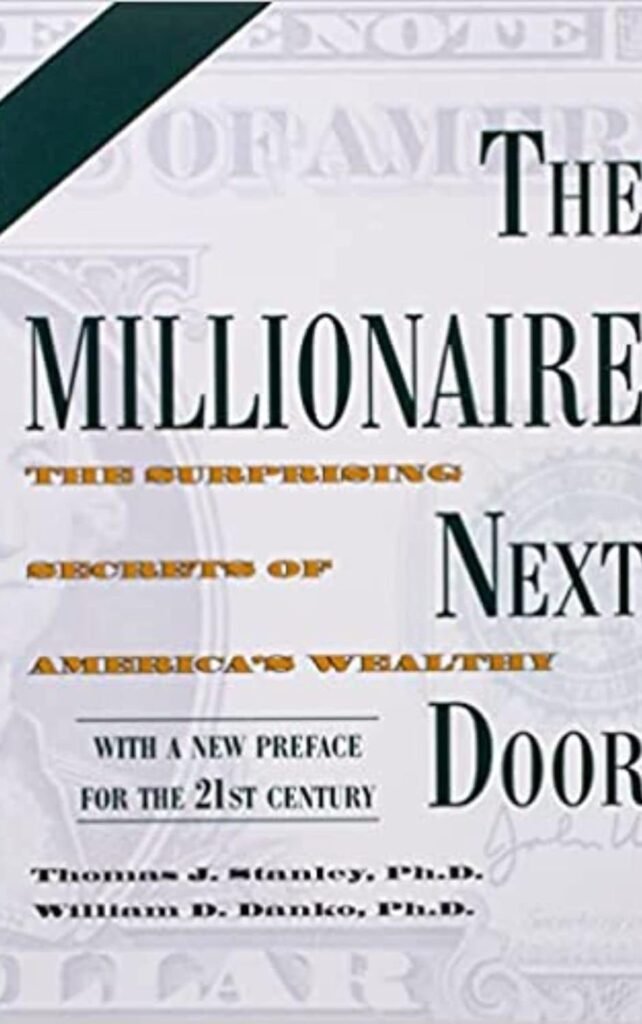
This seminal work is based on rigorous research and interviews, dispelling the widespread myth that wealth equals ostentatious consumption.
Stanley and Danko reveal that the majority of American millionaires do not live in mansions or drive luxury cars; instead, they are characterized by extreme frugality, dedicated budgeting, and prioritizing financial independence over visible social status.
The typical millionaire is a disciplined accumulator of wealth who lives well below their means, often residing in moderate income homes.
The book powerfully illustrates that high income does not equate to high net worth if that income is immediately consumed. The authors found, for instance, that the number one car owned by millionaires was the highly reliable, moderate Toyota Camry—not a high-end sports car.
This finding supports the core argument that the control of consumption is the single most powerful determinant of long-term wealth accumulation.
The ultimate lesson is the need to decouple self-worth and perceived success from material consumption, challenging media-driven stereotypes that perpetually confuse high earnings with true affluence.
9. Your Money or Your Life by Vicki Robin
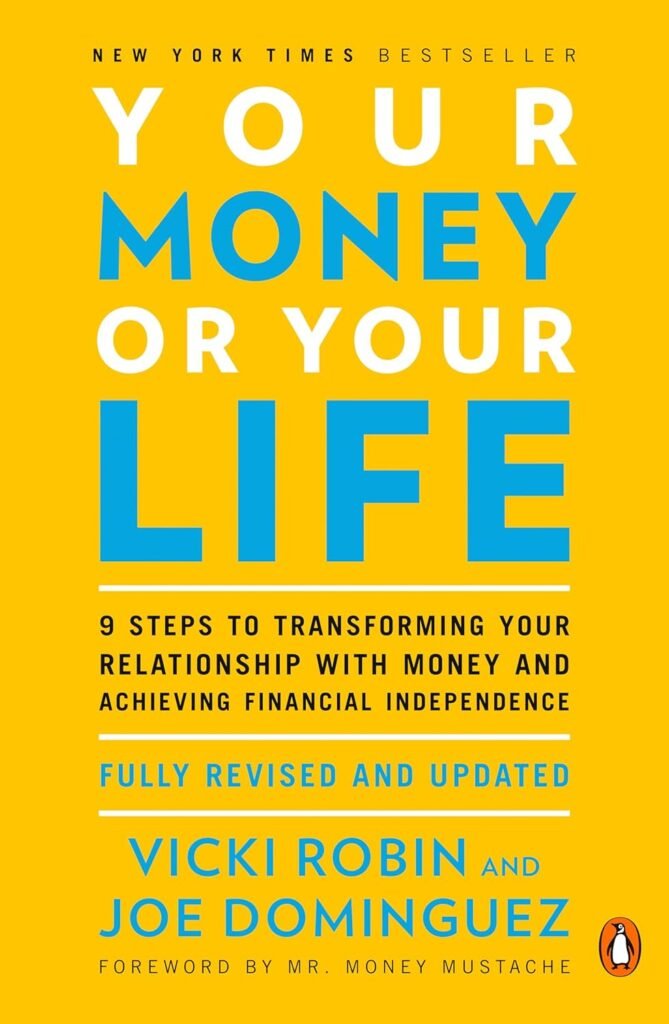
Vicki Robin’s work is the philosophical ancestor of the Financial Independence, Retire Early (FIRE) movement. The book’s radical premise centers on redefining money not as dollars and cents, but as “Life Energy”.
This concept requires readers to calculate the true cost of every purchase in terms of the hours worked—after deducting work-related expenses—required to earn that money.
This translation process profoundly alters spending habits by exposing the immense opportunity cost of consumption, compelling readers to question: “How many hours of my life did I invest to have this chair, car, matched set of cookware…?”.
The book guides readers through nine transformative steps that help them examine their current lives and relationship with money.
A key tool is the Fulfillment Curve, which encourages readers to identify and define their personal point of “ENOUGH.” By understanding this threshold, readers can halt the relentless cycle of working harder only to spend more.
The nine steps ultimately lead the reader to the “Crossover Point”—the moment when monthly investment income equals or exceeds monthly living expenses—achieving true Financial Independence (FI).
The power of this text lies in demonstrating that maximizing life is possible by minimizing unnecessary spending and optimizing life choices, thus accelerating the path to freedom.
10. Die with Zero by Bill Perkins
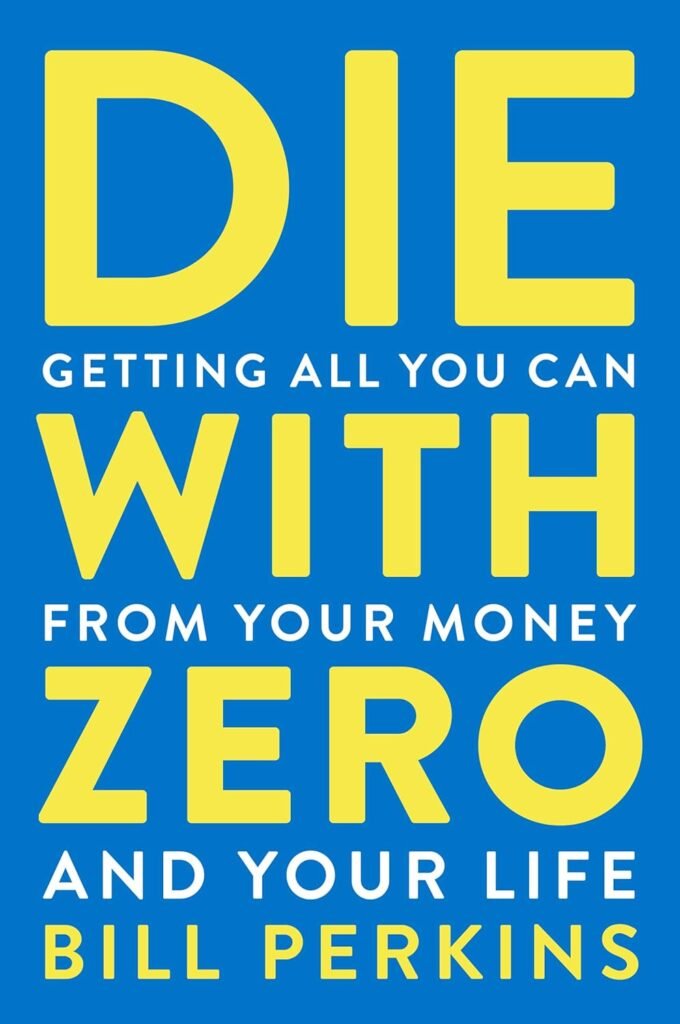
Bill Perkins addresses a unique and modern financial affliction: the tendency of “super savers” to accumulate wealth far beyond their needs, only to die with a substantial amount of unspent capital.
This philosophy acts as a counterpoint to the accumulation mindset, arguing that wealth saved too late is wealth wasted, as experiences must be purposefully timed to periods of high health and energy.
Perkins maintains that the utility derived from money inevitably declines with age; for instance, physically demanding adventure travel enjoyed at age 35 is far more valuable than the equivalent trip taken at age 75.
Die with Zero encourages intentional spending designed to maximize life fulfillment by creating “memory dividends.”
Perkins urges readers to calculate the optimal amount of money necessary to survive comfortably until death, ensuring security while eliminating the fear of reckless spending.
By focusing on generating these high-quality experiences, the book completes the philosophical circle started by Your Money or Your Life.
While the latter teaches the reader how to reach financial independence, Die with Zero teaches the reader how to effectively and joyfully utilize that freedom, ensuring that life, not just wealth, is maximized.
Conclusion: Your Next Step in Financial Transformation
A comprehensive analysis of these ten life-changing texts reveals a singular, unifying thread across ancient parables, behavioral studies, and modern tactical guides: the absolute necessity of intentionality.
Financial success is never an accident; it is the predictable byproduct of purpose-driven decisions. Whether the goal is mastering basic savings (Clason), eliminating crippling debt (Ramsey), automating long-term investing (Collins), or maximizing experiential spending (Perkins), every successful financial outcome stems from an intentional framework designed to align money with purpose.
True security is achieved when personal behavior manages financial math, not the other way around. As philosophical wisdom dictates, control over desire is the true measure of wealth: “It is not the man who has too little, but the man who craves more, that is poor”.
The challenge facing the contemporary reader is not a lack of information but an overwhelming abundance of conflicting advice.
This curated list provides the foundation. You must now choose one book that directly addresses their current greatest point of friction—be it debt, fear, or confusion about investing.
Consider the urgency: data indicates the median starting age for investing is 28. Every year delayed means thousands of dollars in lost compounding power.
For younger generations seeking guidance, the rising trend of trusting artificial intelligence for financial advice (41% of Gen Z are likely to use AI advice daily) underscores the need for a timeless, human framework.
These ten books offer that essential human filter, ensuring financial decisions are grounded in time-tested principles of behavior and value, not solely dependent on algorithmic suggestions.
Begin the transformation today by committing to the wisdom contained within one of these essential texts.
ALSO READ:
How to negotiate salary after job
Evidence-based professional wellbeing
Join the Career Intelligence Community
Get exclusive data insights, downloadable tools, and mindful career strategies delivered monthly — no fluff, no spam.