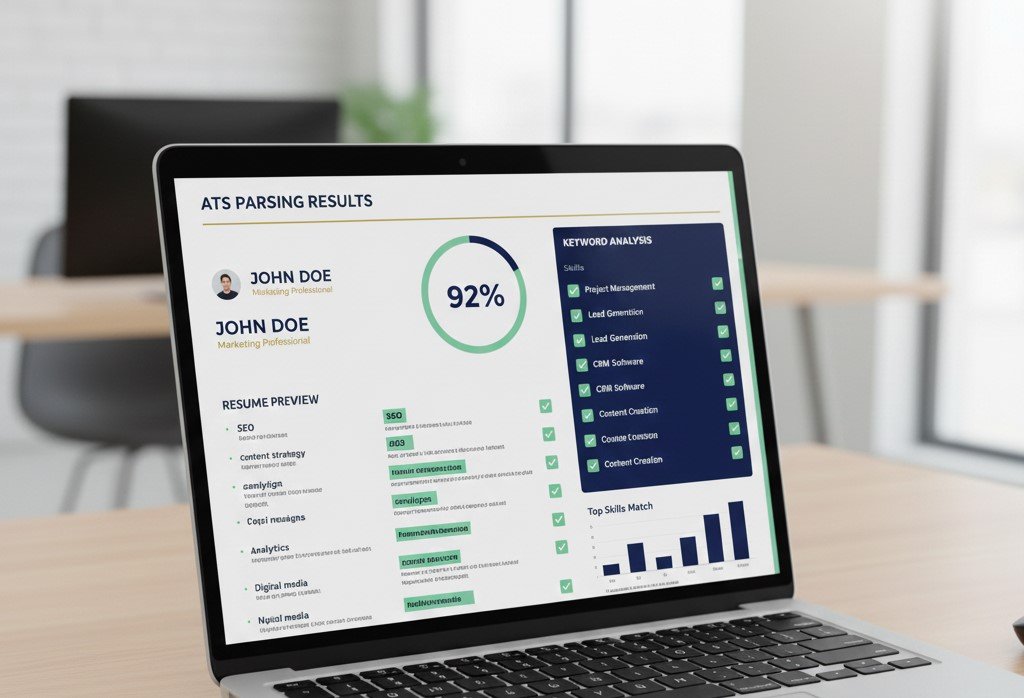
The modern job market operates under the constraint of volume, necessitating the widespread adoption of Applicant Tracking Systems (ATS) by nearly all large corporations, including 97% of Fortune 500 companies.
These systems serve as the initial, automated gatekeeper, designed to streamline recruitment by sorting and filtering massive numbers of applications. Data indicates that approximately 75% of job applications are disqualified by the ATS before a human recruiter ever sees them, highlighting the critical necessity of technical optimization.
The focus for candidates should not merely be on passing the filter, but on ensuring the resume data is presented in a manner that maximizes the final relevance score and generates a powerful candidate summary for human review.
Contents
Understanding the ATS: The Three-Tiered
Effective resume optimization requires recognizing that screening occurs in three distinct tiers, each building upon the success of the previous one. A failure in Tier 1 guarantees application rejection, regardless of a candidate’s qualifications.
Tier 1: Parsing Integrity (The Prerequisite)
The initial stage involves the system scanning the submitted document and converting it into machine-readable data. This process relies heavily on Optical Character Recognition (OCR) and Natural Language Processing (NLP) to extract essential details such as contact information, work history, skills, and dates.
According to Upskillist, if the formatting of the document is overly complex, utilizing elements like tables, text boxes, or columns, the data can become scrambled, misinterpreted, or entirely overlooked during parsing. This structural purity is the non-negotiable prerequisite for all subsequent screening steps.
Interested in revamping your resume? Explore the top ATS resume checkers.
Tier 2: Keyword Scoring (The Filter)
Once the data is successfully extracted, the ATS algorithms engage in keyword matching. The system compares the terms on the candidate’s resume against the critical keywords and phrases listed in the job description.
The algorithm scores the resume based on the relevance of these matches, as well as the density and strategic placement of the terms, prioritizing keywords found in visible sections like the professional summary or job titles.
Resumes that fall below a minimum qualification threshold established by the hiring manager are typically filtered out at this stage, writes Career Edge on how to beat ATS.
Tier 3: AI Synthesis (The Summarizer)
Modern ATS platforms, particularly those integrating Generative AI (GAI) and deep learning models, move beyond simple keyword matching. After scoring, the system analyzes the extracted text to understand context, infer meaning, and synthesize complex information—such as career trajectory, achievements, and core strengths—into a concise, objective summary for the human reviewer.

This technological advancement shifts the optimization strategy from merely listing skills to providing objective, measurable inputs that facilitate the creation of a strong, data-driven overview of the candidate’s value.
The quality of this AI-generated summary directly influences the human recruiter’s initial perception of the candidate.
The Evolution of Scoring: From Match to Meaning
The capabilities of current screening algorithms necessitate a move beyond rigid keyword repetition. While traditional screening focused on finding exact matches, contemporary systems use advanced techniques like Latent Semantic Indexing (LSI) to assess contextual relevance.
LSI identifies words that frequently co-occur in similar contexts, allowing the system to determine the true meaning of a skill or experience based on related terminology.
For instance, if a job requires “Python programming,” the inclusion of related terms like “Python scripting,” “Python development,” and “data structures” provides the system with conceptual validation that the candidate possesses practical expertise, thereby maximizing the relevance score and establishing subject matter authority.
The 5-Point Parsing Checklist
The initial five points of the optimization checklist are dedicated to guaranteeing Tier 1 parsing success, functioning as a structural firewall against automated rejection.
1. Layout Purity: Avoiding Visual Chaos
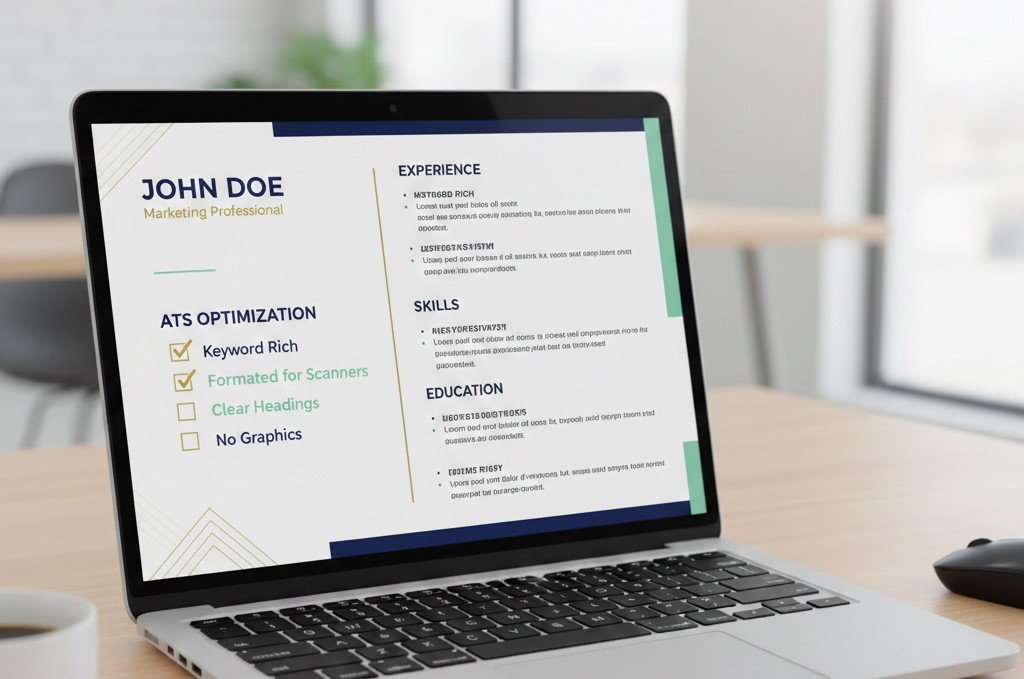
The central principle of ATS-friendly formatting is simplicity. Complex design elements invariably disrupt parsing integrity. Therefore, candidates must strictly avoid the use of graphics, images, logos, tables, text boxes, and columns.
These elements can scramble the content when the ATS attempts to read the resume, potentially leading to the loss or misinterpretation of vital qualifications. A single-column, linear, and left-aligned layout is the preferred format, as it minimizes the risk of data corruption during the OCR phase.
Furthermore, Upskillist warns—critical information should never be placed in the document’s headers or footers, including page numbers, as these areas are frequently skipped by the ATS, leading to missing contact details or education history.
2. File Type and Font Compatibility: The Decision Matrix
The choice of file format often determines parsing success, and the optimal selection requires attention to the specific application instructions.
While older ATS systems and internal databases often scan DOCX files more easily, modern systems generally handle text-based PDFs accurately and securely. According to Jobscan publication on Word vs. PDF, the PDF preserves the design integrity across different operating environments.
The selection of a font also impacts readability. Candidates should use clean, readable, and standard fonts known to be easily processed by ATS, typically in 10- or 12-point size.
Enhancv recommends these fonts: Arial, Calibri, Times New Roman, Cambria, and Georgia. Decorative or uncommon fonts introduce a high risk of misinterpretation.
ATS File Type Decision Matrix
| Format | Pros | Cons | When to Use |
| Text-Based PDF | Preserves design; high compatibility with modern ATS. | Older systems may struggle; formatting may be lost if poorly constructed. | Default choice when no format is specified. |
| DOCX (Word) | Highly flexible; preferred by older ATS/internal databases. | Formatting can shift across systems/versions. | When the job posting explicitly requests it or for older/high-volume systems. |
| Plain Text (TXT) | Guaranteed ATS readability, perfect for simple submissions. | Lacks design, looks basic and unprofessional to recruiters. | Only when direct text input is required. |
3. The Consistency Imperative: Dates and Headers
Consistency in structural elements is vital for accurate data categorization. Section headings must be standard and explicit, such as “Work Experience,” “Education,” or “Skills”.
Using creative or non-standard headers like “My Journey” instead of “Work Experience” can confuse the categorization process and result in information being placed in the wrong data field.
Date formatting requires similar precision. Inconsistent date formats (e.g., mixing “March 2023,” “03/2023,” and “3-23” on the same document) can confuse the ATS, leading to distorted job chronology.
Recruiters frequently filter candidates based on calculated years of experience; if the dates cannot be accurately interpreted, the application may be prematurely excluded from consideration.
Recommended formats—according to Jobscan—include “Jan 2021 – Mar 2023” or “01/2021 – 03/2023,” maintained uniformly throughout the document.
Discover top tech skills for non-tech professionals to scale up now!
4. Special Characters and Abbreviations Protocol
The use of certain characters can hinder accurate parsing. For bullet points, the safest practice is to use standard black dots. Custom bullet points, such as unique symbols or decorative elements (stars, diamonds, checkboxes), are prone to being misinterpreted or converted into unreadable code during the parsing process.
Furthermore, excessive use of abbreviations, particularly for certifications or degrees, should be avoided. It is recommended to spell out full terms, such as “Bachelor of Science,” unless the shortened form is widely accepted and defined, ensuring the ATS captures the correct qualification data.
The Keyword Score Maximizer (SEO Strategy for Relevance)
With structural integrity established, the focus shifts to maximizing the Tier 2 relevance score through strategic content optimization, effectively treating the resume as a searchable database entry.
1. Keyword Extraction and Categorization
The job description acts as the primary source of truth for keyword optimization; candidates must carefully scan the posting to identify the required skills and qualifications.
Keywords should be categorized into actionable groups to ensure appropriate placement on the resume. These groups include:
- Hard Skills: Technical abilities (e.g., Python, SQL, Google Analytics).
- Soft Skills: Interpersonal attributes (e.g., communication, collaboration).
- Action Verbs: Achievement-focused terms (e.g., managed, developed, increased).
- Prerequisites: Job titles, education levels, and certifications.
Optimization is not achieved through “keyword stuffing,” which risks triggering filters designed to spot manipulation, but through natural integration..
Keywords must be “sprinkled” throughout the document in relevant context to demonstrate proficiency and provide evidence of competence.
2. Strategic Keyword Placement for Scoring Priority
ATS algorithms assign different weighting to keywords based on where they appear. Resumes are scored higher when keywords appear in high-visibility and high-priority sections, confirming their immediate relevance to the role.
According to Novoresume on resume keywords to land a job, keywords relating to the specific job title should be clearly articulated in the Professional Summary or Title section.
Further, Novoresume insists that hard skills should be systematically listed in the dedicated Skills section, aligning directly with the core requirements of the job description.
In the Work Experience section, the contextual integration of keywords is achieved by using strong action verbs to begin bullet points, followed by details that incorporate both hard skills and industry-specific terminology.
This strategic placement ensures that the ATS registers the skill not only as a listed competency but as a demonstrated capability within a professional setting.
The GAI Edge – Contextual Optimization with Semantic Indexing
The highest level of ATS optimization involves catering to the capabilities of Generative AI, ensuring the system can accurately infer conceptual understanding (LSI) and synthesize high-impact achievements.
This addresses the advanced screening protocols that assign relevance based on contextual depth.
1. Beyond Exact Match: The Power of LSI Keywords
Latent Semantic Indexing (LSI) systems assess the relationships between words to determine the conceptual meaning of the content, even if the exact keyword is not explicitly used. This capacity allows modern algorithms to move past simple term matching and evaluate true subject matter expertise.
For example, if a job description lists “Credit Cards” as a required domain expertise, a candidate who simply lists the term once might score lower than one whose experience narrative includes semantically related terms such as “credit score,” “interest rate,” and “financial analysis”.
These supporting, conceptual terms prove to the algorithm that the candidate understands the context and broader ecosystem of the primary keyword, significantly boosting the relevance score.
Incorporating LSI terms naturally within achievement descriptions provides a strategic advantage by signaling a deep conceptual mastery to the AI synthesis layer.
2. Writing for AI Synthesis: The Quantifiable Achievement Mandate
The goal of the Tier 3 optimization is to ensure the Generative AI can extract high-quality, quantifiable data points to construct a compelling, objective candidate summary. When reviewing resumes, AI excels at synthesizing measurable results.
Consequently, bullet points that merely list duties are low-value input for the AI, while bullet points structured around measurable achievements provide objective data that the AI instantly prioritizes.
Every experience bullet point should adhere to the Challenge-Action-Result (CAR) framework, culminating in a quantified metric.
For example, instead of stating
“Managed company social media,”
a high-value bullet point would state:
“Leveraged social media strategy (LSI keywords) to market brand presence, increasing follower engagement by 45% and driving 10,000 new monthly visits (quantifiable achievement)”.
This structured data allows the GAI to efficiently synthesize the candidate’s core strengths, accomplishments, and quantifiable impact for the recruiter, accelerating the decision-making process.
The required optimization strategy for keywords is summarized below, detailing the necessary mapping for maximum impact across the three tiers of screening.
Keyword Strategy: Primary and Semantic (LSI) Keyword Mapping
| Keyword Type | Source | Example (If Job asks for “Cloud Architect”) | Resume Location |
| Primary Hard Skill | Job Description | AWS, Terraform, Microservices | Skills Section, Experience Bullet Points |
| Primary Action Verb | Job Description | Architected, Migrated, Optimized | Work Experience Bullet Points |
| Semantic (LSI) Support | Contextual Relevance | Serverless, Infrastructure as Code, API Gateway | Narrative context to prove deep conceptual understanding |
| GAI/Contextual Metric | Candidate Achievement | Reduced hosting costs by 18%; 99.9% uptime SLA | Quantifiable Achievements, Summary |
The Master 5-Minute Pre-Submission Checklist
To translate the comprehensive analysis of ATS, NLP, and GAI mechanics into an efficient final quality assurance step, the following five-point checklist addresses the most common points of failure and highest potential for scoring maximization.
Applying this list takes less than five minutes but ensures the resume is optimally structured for automated screening.
1. Structural Integrity (The Parsing Test)
The candidate must confirm that the document is constructed using a clean, single-column, linear layout. This verification should specifically ensure the complete absence of tables, text boxes, images, and multiple columns, which are known to scramble content during the extraction phase.
Additionally, verify that all critical information resides within the main body, ensuring the document margins are clear of any text elements, as content in headers or footers is frequently missed by the ATS.
2. File and Font Security
Confirm the chosen file type adheres to the employer’s request; default to a text-based PDF unless a DOCX file is explicitly mandated by the application portal.
The document must use only standard, ATS-friendly fonts, such as Arial or Calibri, in a 10–12 point size.
3. Direct Keyword Audit
Perform a final comparison against the job description. The candidate must verify that the target job title, all requisite hard skills, and any essential certifications are accurately reflected and mirrored across the summary and skills sections of the resume.
Ensure standard section headings (e.g., “Work Experience,” “Education”) are used and that the date formats are uniform throughout the document.
4. Semantic Context Validation (The GAI Test)
Review the work history section to ensure that beyond the primary keywords, conceptually related (LSI) terminology is integrated into the descriptive narrative, proving deep competence.
Further, verify that all critical acronyms and degrees have been spelled out at least once to ensure accurate identification by the ATS.
5. Quantifiable Achievement Check
The most impactful step for GAI optimization involves reviewing every key professional bullet point to ensure it contains strong action verbs and is followed by quantifiable results or metrics.
This structure provides the necessary data input for the Generative AI to synthesize an objective, high-value summary of the candidate’s accomplishments, maximizing differentiation during the final human review phase.
The 5-Minute ATS Resume Checklist in Summary
In today’s tech-driven hiring environment, small details can make a big difference. A resume that’s readable, well-structured, and aligned with the job description stands a far better chance of making it through automated filters and into a recruiter’s hands.
The 5-Minute ATS Checklist is designed to simplify that final review, helping you catch the issues that most often lead to parsing errors or low relevance scores.
By taking just a few minutes to confirm your layout, formatting, keywords, context, and metrics, you ensure that your resume works with the ATS—not against it.
More importantly, you give hiring teams a clear, data-backed picture of your skills and achievements. This small habit can easily become one of the highest-impact steps in your job search.
Ready to strengthen your next application? Run your resume through this 5-minute checklist before you hit submit—and give yourself a real edge in the ATS.
Explore more articles on career trajectory and skill analytics, free.
Join the Career Intelligence Community
Get exclusive data insights, downloadable tools, and mindful career strategies delivered monthly — no fluff, no spam.