
Teachers in Kenya today grapple with stagnant careers, low salaries amid rising costs, bureaucratic transfer systems, and heavy workloads; affecting both morale and teaching quality.
TL;DR – Key Summary Points
- Many teachers stagnate in one job group for 7–10+ years despite qualification
- Low take-home pay is worsened by inflation and new statutory deductions
- Transfers, promotions, and hiring remain slow, opaque, and politicized
- Teacher shortages and limited resources increase workload and burnout
Introduction to the Challenges Facing Teachers in Kenya
The teaching profession has, over the years, been viewed as one of the most prestigious in Kenya. Teachers were, and are still perceived by some sections of the community, as nation builders and models to emulate.
To teach was to have a guaranteed and dignified career. This is no longer the case.
Today, the teaching profession is facing a dilemma of stalled progression, increased costs of living, bureaucratic inefficiency, politicization of the profession, and low morale. This profession is still at the heart of socio-economic development in Kenya. The professionals involved are felt to be neither supported nor valued.
This piece will undertake a thorough, research-based examination of the challenges facing teachers in Kenya today, from within the paradigms of policy documents, teachers’ perspectives, trade union complaints, to bureaucratic truths about the Teachers Service Commission.
It will equally provide tentative suggestions on how the plight of teachers can be solved.
Contents
What Are the Main Challenges Facing Teachers in Kenya Today?
Teachers in Kenya face a complex mix of economic, institutional, and professional challenges. While some of these issues are longstanding, others have intensified in recent years due to policy changes, budgetary constraints, and broader economic pressures.
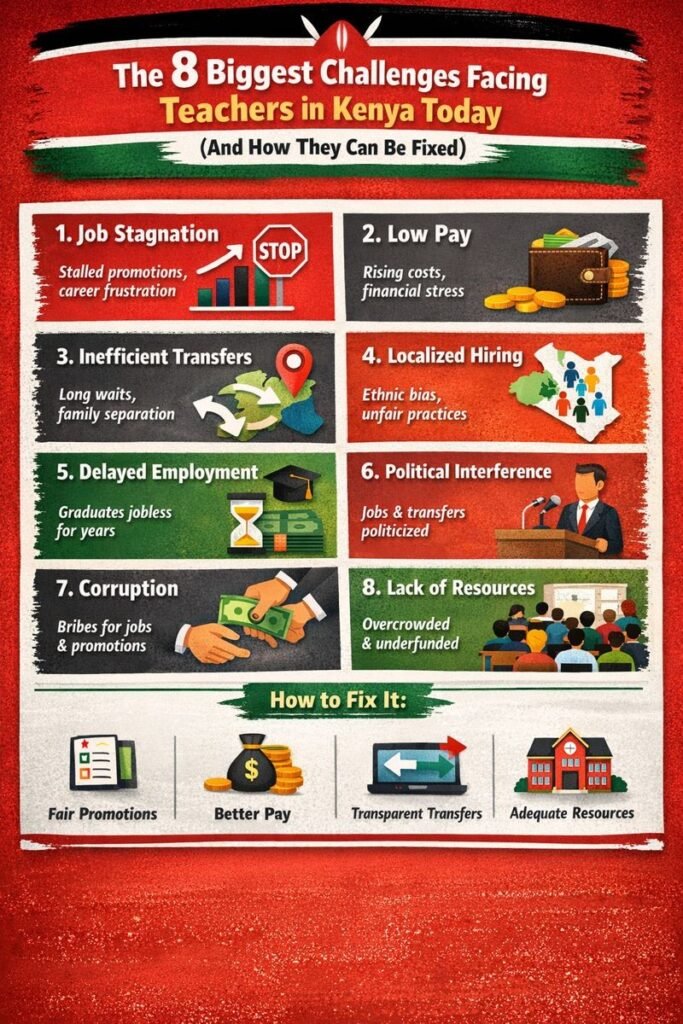
Summary of Key Challenges Facing Teachers in Kenya
| Challenge | Key Issues | Impact on Teachers & Education |
|---|---|---|
| 1. Job Stagnation & Poor Career Progression | Delayed promotions, restrictive TSC guidelines, heavy weighting of age and administrative roles | Low morale, limited salary growth, loss of motivation, reduced teaching quality |
| 2. Low Take-Home Pay & Rising Cost of Living | Modest salaries, inflation, SHA and housing levy deductions, stagnant allowances | Financial stress, debt dependency, side hustles, distraction from core teaching duties |
| 3. Ineffective Teacher Transfer System | Long delays, “acknowledged” applications, limited transparency, weak humanitarian consideration | Family separation, emotional distress, insecurity, burnout |
| 4. Discriminatory Localised Employment Practices | Preference for local candidates, ethnic bias, deviation from constitutional mandate | Unfair deployment, reduced national cohesion, blocked mobility for qualified teachers |
| 5. Delayed Employment After Graduation | Limited recruitment slots, long waiting periods, reliance on internships | Graduate unemployment, loss of skills over time, frustration among trained teachers |
| 6. Politicisation of the Teaching Profession | Political interference in hiring, transfers, and school administration | Erosion of meritocracy, fear, weakened institutional authority |
| 7. Corruption & Exploitation of Teachers | Cartels demanding bribes for jobs or promotions, opaque systems | Financial loss, distrust in TSC processes, inequality and injustice |
| 8. Inadequate Resources & Teacher Shortages | Large class sizes, insufficient learning materials, understaffing | Teacher burnout, poor learner outcomes, reduced effectiveness in classrooms |
Below are the eight biggest challenges facing teachers in Kenya today, explained in depth.
1. Job Stagnation and Broken Career Progression
Why job stagnation is a major problem
One of the most painful and demoralizing problems facing teachers in Kenya is career stagnation. Thousands of teachers have remained in the same job group for seven to ten years or more, despite meeting the academic and professional requirements for promotion.
When over 132,000 teachers compete for roughly 21,300 promotion slots, it underscores the intense competition and limited opportunities for career progression.
In theory, the Teachers Service Commission Act (Cap 212) mandates the Commission to:
- Facilitate career progression
- Promote professional development
- Ensure merit-based appointments to leadership positions
In practice, many teachers feel the system has failed to deliver on this promise.
How TSC promotion guidelines disadvantage many teachers
Recent promotion score sheets (C1 to D4) shared by the Teachers Arena, reveal a system that heavily favours:
- Teachers who have acted in administrative roles (Deputy Principals, Principals, Head Teachers)
- Older teachers, particularly those aged 52 and above
For example:
- Administrative responsibility can attract up to 25 marks
- Age can contribute up to 30 marks
- Academic qualifications (including PhD) earn a maximum of only 3 marks
This means:
- A younger, highly qualified classroom teacher with excellent performance can easily lose out to an older teacher who has acted administratively—even if the latter has weaker academic credentials.
How Does Job Stagnation Affect Teachers?
Job stagnation has real consequences; namely:
- No promotion means no salary increment, unless negotiated through a CBA
- Teachers feel professionally invisible and undervalued
- Motivation declines, affecting classroom performance
For many teachers, stagnation is not a reflection of incompetence—but of a structurally restrictive promotion funnel.
Get Our Career Advisory Now
Looking for higher income, clearer career direction, and long-term financial security? Request our data-driven career advisory.
2. Low Salaries Amid Rising Cost of Living
Despite data showing Kenyan teachers earn competitively relative to GDP per capita, the reality for most is persistent financial strain as salaries fail to keep pace with soaring living costs.
In absolute terms:
- Salaries remain low compared to rising food prices, housing costs, transport, and school fees
- Inflation has steadily eroded purchasing power
How Statutory Deductions Affect Teachers
While statutory deductions fund important national programs, they significantly reduce the teacher’s net take-home pay.
Since the Covid-19 era, teachers have faced new or revised deductions, including:
1. Social Health Authority (SHA)
- 2.75% of gross salary
- No upper cap
- A teacher earning KES 100,000 pays KES 2,750 monthly
2. Affordable Housing Levy
- 1.5% employee contribution
- Matched by employer
- Mandatory regardless of housing needs
Why teachers in Kenya still feel underpaid
Teachers report feeling underpaid because:
- Salary increments do not keep pace with inflation
- Promotions are delayed or denied
- Deductions increase while allowances stagnate
As a result, many teachers:
- Take loans to survive
- Engage in side hustles
- Experience chronic financial stress
3. Ineffective and Frustrating Teacher Transfer System
In February 2021, TSC introduced an online teacher transfer system, raising hopes of transparency and efficiency. Teachers expected:
- Faster processing
- Fair consideration of personal circumstances
Instead, many encountered a system where applications remain permanently marked as “Acknowledged”—with no action taken.
What are some of the reasons why teachers apply for transfer?
Teachers apply for transfers due to serious reasons such as:
- Aging or sick parents
- Domestic violence
- Insecurity
- Medical conditions (self or child)
- Spousal reunification
Yet many wait years without feedback.
The new teacher transfer system with “swap module”
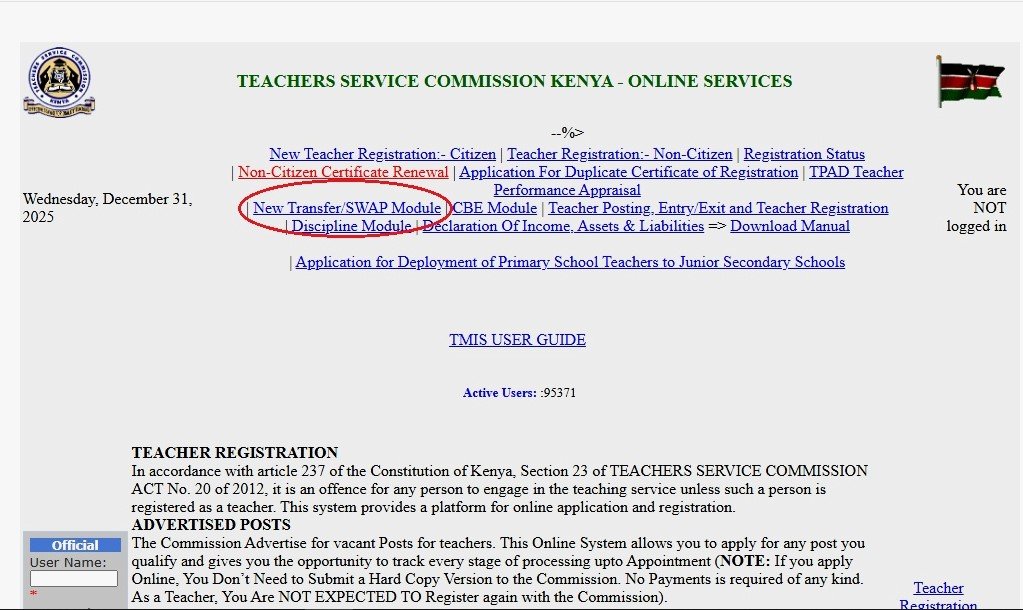
Beginning on August 18th, 2025, the Teachers Service Commission rolled out a new online teachers’ transfer system. This new IT approach seeks to enhance fairness, speed, and efficiency by enabling automated transfers and swap matching, as well as real-time tracking of applications.
However:
- Effectiveness is still unproven
- Many teachers report no tangible improvement
The result is emotional strain, family separation, and declining morale.
4. Discriminatory Localized Employment Practices
Localized hiring favoritism is increasingly undermining fair teacher recruitment in Kenya, with preference often given to candidates from the sub-county or those with political connections.
Increasingly, teachers report that recruitment and deployment favour:
- Teachers born within the sub-county
- Candidates with local political backing
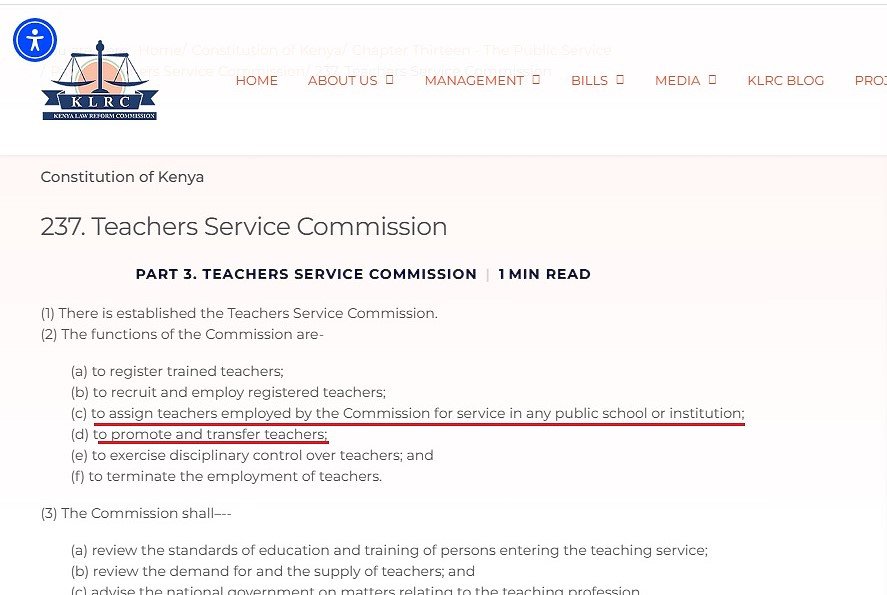
This trend directly contradicts Article 237 of the Constitution of Kenya (2010), which grants TSC exclusive authority to:
- Recruit teachers
- Assign and deploy teachers nationally
Why localized employment is dangerous
Localized hiring:
- Encourages ethnic and regional bias
- Undermines national cohesion
- Locks out qualified teachers from other regions
For teachers posted far from their home counties, such practices also worsen transfer challenges and insecurity concerns.
5. Delayed Employment and Prolonged Unemployment After Graduation
There was a time when teachers graduated from college or university and received immediate TSC posting letters. That era is long gone.
Today:
- Thousands of trained teachers remain unemployed for five to seven years or more
- Recruitment cycles are irregular and limited
The internship bottleneck
To improve employability, many graduates are now forced to:
- Serve as interns
- Accept temporary contracts
While internship stipends are helpful, they:
- Delay permanent pensionable employment
- Create uncertainty and insecurity
The paradox is painful:
Kenya faces teacher shortages, yet thousands of qualified teachers remain jobless. Contrary to expectations, over 343,000 trained and registered teachers remain unemployed, highlighting a disconnect between training and absorption into the public service.
According to the Daily Nation, Junior School alone needs an additional 72,000 teachers.
6. Politicization of the Teaching Profession
The growing politicization of teaching in Kenya represents a dangerous threat, with politicians and local leaders frequently interfering in employment, transfers, and school administration.
There have been multiple reports of:
- Politicians issuing “employment letters”
- MPs influencing transfers and postings
- Local leaders exerting control over school administration
Why politicization of the teaching profession undermines professionalism
Political interference of the teaching profession undermines the teaching profession in the following ways:
- Erodes meritocracy
- Weakens institutional authority of TSC as enshrined in the Constitution and the TSC Act CAP 212.
- Creates fear and silence among teachers
- Teaching becomes less about competence and more about connections.
7. Corruption and Exploitation of Teachers
Desperation has created fertile ground for corruption. Across the country:
- Teachers are conned into paying large sums
- Promises are made for “automatic employment” or “guaranteed promotion”
In most cases:
- The money is lost
- The job or promotion never materializes
Why corruption thrives in the teaching profession
Corruption thrives where:
- Systems lack transparency
- Processes are slow and opaque
- Teachers feel powerless
Until recruitment and promotions become fully transparent and accountable, exploitation will persist.
8. Inadequate Resources and Overwhelming Workloads
Many schools—especially in rural and marginalized areas—lack:
- Teaching and learning materials
- Adequate classrooms
- ICT infrastructure
Teachers often improvise using personal resources.
In a report by Women Educational Researchers of Kenya (WERK) on the status of primary school education in Kenya, it is evident that most schools lack learning materials, but where materials have been provided, they could be outdated or not relevant to the curriculum being used.
Large class sizes and burnout
Due to teacher shortages:
- Class sizes can exceed 60–80 learners as reported by WERK 2024.
- Teachers handle multiple subjects and roles; especially in Junior School, where some were handling learning areas they didn’t train in college/university
- Burnout and emotional fatigue are common
This directly affects learning outcomes and teacher wellbeing.
What Is the Greatest Challenge to the Teaching Profession in Kenya?
If one challenge stands out above the rest, it is this:
A broken system that limits career growth while increasing workload and financial pressure.
Job stagnation, poor remuneration growth, politicization, and inefficiency all intersect to create a profession that demands much—but gives little back.
How to Overcome Challenges Facing Teachers in Kenya
Solving the challenges facing teachers in Kenya today requires systemic reform, not cosmetic fixes.
This process requires actionable reforms by several stakeholders: TSC, Ministry of Education, Teachers’ Unions (KNUT, KUPPET, etc.), and the school administrators.
Here are some of the proposed actions:
1. Reform Promotion and Career Progression
- Balance administrative, academic, and performance criteria
- Reduce age-based bias
- Ensure predictable promotion timelines
2. Review Teacher Remuneration Holistically
- Adjust salaries to reflect inflation
- Introduce standing allowances
- Protect take-home pay
3. Fix the Transfer System
- Enforce timelines
- Prioritize humanitarian cases
- Improve transparency
4. Depoliticize Recruitment and Deployment
- Enforce constitutional mandates
- Penalize political interference
5. Expand Teacher Recruitment
- Address shortages
- Absorb long-serving interns
- Align recruitment with population growth
6. Strengthen Anti-Corruption Safeguards
- Public promotion score sheets
- Independent oversight
- Whistleblower protection
7. Invest in School Resources
- Improve infrastructure
- Reduce class sizes
- Support teacher wellbeing
Conclusion: Why Fixing Challenges Facing Teachers in Kenya Matters
Teachers are not asking for special treatment—they are asking for fairness, dignity, and a future.
When teachers are motivated, secure, and respected:
- Learners perform better
- Schools become stable
- The nation benefits
Addressing the problems facing teachers in Kenya is not just a labour issue—it is an investment in the country’s future.
FAQS About The Main Challenges Facing Teachers in Kenya
What are the main challenges facing teachers in Kenya today?
The main challenges facing teachers in Kenya today include job stagnation, low salaries amid rising living costs, delayed promotions, inefficient transfer systems, politicisation of recruitment, corruption, teacher shortages, and inadequate teaching resources.
What is the biggest challenge facing teachers in Kenya?
The biggest challenge facing teachers in Kenya is career stagnation, where many qualified teachers remain in the same job group for years without promotion, resulting in poor salary growth, low morale, and reduced motivation.
Why do many teachers stagnate in one job group for years?
Teachers stagnate due to restrictive promotion guidelines, limited vacancies, heavy weighting of age and administrative roles, and budget constraints that limit the number of promotions TSC can implement annually.
Are teachers in Kenya underpaid?
In absolute terms, teachers in Kenya earn modest salaries that struggle to keep up with inflation, rising deductions, and cost of living pressures. While their pay compares favourably to GDP per capita, many teachers feel underpaid due to stagnant job groups and reduced take-home pay.
How can teaching challenges in Kenya be overcome?
Teaching challenges can be overcome through transparent promotion systems, fair remuneration reviews, efficient transfer mechanisms, depoliticized recruitment, increased teacher hiring, better resourcing of schools, and stronger accountability within TSC.
Continue Reading
Are Teachers in Kenya Underpaid? A Data-Driven Comparative Analysis (2026 Edition)
The author of this article is a high school teacher with more than 12 years experience in teaching and career guidance.
Join the Career Intelligence Community
Get exclusive data insights, downloadable tools, and mindful career strategies delivered monthly — no fluff, no spam.