The teaching profession inherently cultivates a remarkably valuable skill set, yet this expertise is frequently undervalued within traditional public sector salary structures. The successful pursuit of additional income relies on recognizing these skills as premium assets that can command high rates in the open market.
Teachers possess fundamental mastery in pedagogy, advanced subject matter expertise, and sophisticated administrative capabilities. Furthermore, the daily rigors of classroom management develop exceptional organizational capacity, communication skills, and emotional intelligence—traits highly sought after in consulting and content creation industries.
The critical challenge for any educator seeking supplementary income is bridging the valuation gap: how to transfer these high-value professional skills from the constrained public sector environment to the competitive external market where they can command a significant hourly premium.
The strategic path to financial growth requires professionals to analyze their specific niche specialization—for example, the distinct market value of an AP Physics instructor compared to a general elementary homework helper. The external market is willing to pay disproportionately higher rates for specialized, high-stakes outcomes, such as guaranteed improvements in test scores, successful academic grant funding, or highly efficient organizational systems.
Read Quick Summary
Contents
What is a Side Income?
Side incomes (or side hustles) are additional earnings people make outside their main job. They’ve become increasingly common as living costs rise and more professionals look for financial security, personal freedom, or a way to explore new interests. A side income can be anything from freelancing and online tutoring to selling digital products, running a small online store, or investing in passive income streams like dividends or rentals.
Well-chosen side incomes offer several benefits. They diversify your earnings, making you less dependent on a single paycheck. They also help you build new skills, expand your network, and open doors to future career or business opportunities. Many people even turn successful side hustles into full-time ventures.
The best side incomes are flexible, sustainable, and match your strengths. Digital and online options are especially attractive because they require low start-up costs and can be done from anywhere.
Having a side income is not just helpful—it’s becoming a smart and strategic way to build financial stability and long-term growth. In this article, I’ll provide you show 30 top side income ideas for teachers; including legal issues and compliance.
Active vs. Passive Income: A Dual-Track Strategy for Educators
A resilient financial strategy for educators typically involves a dual-track approach, balancing the immediate cash flow generated by active income with the long-term scalability provided by passive income streams.
Active Income refers to earnings that are directly tied to the educator’s time investment, such as tutoring or consulting. This stream is crucial for addressing immediate financial needs and for securing the initial capital required for business development. Because high-rate active roles pay immediately, they provide the necessary financial stability required during the initial, often difficult, launch phases of a new venture.
Passive Income, conversely, requires a significant investment of effort upfront (e.g., developing online courses or teaching resources) but generates revenue over an extended period with minimal ongoing labor. This model is the necessary key for educators to ultimately decouple their earning potential from the limits of time. A primary objective for any educator seeking long-term financial security should be to build passive assets that continue to generate revenue for months or even years after the initial work is completed.
The most effective approach for time-constrained teachers involves developing a hybrid funding model. This strategy dictates using the high-rate, immediate returns from active income streams—such as specialized test preparation tutoring, which can command $80 to $110 per hour —to fund the investment required for developing high-quality passive assets, including course content creation and platform fees.
Teachers often lack large blocks of disposable time, and if a passive project fails to deliver quick returns, it is frequently abandoned. The infusion of high-rate active tutoring income provides the necessary financial stability and time buffer to sustain the rigorous development cycle required for successful digital content creation, leading to sustainable long-term scale in their business endeavors.
Navigating Ethics, Contracts, and Conflicts of Interest
As highly respected professionals and role models, teachers pursuing supplementary income must prioritize ethical compliance and adhere strictly to legal requirements imposed by their primary employer.
This focus on “decency” extends beyond legality to include the avoidance of any activity that creates a professional conflict of interest (COI) or the appearance of impropriety.
The Non-Negotiable Contract Review and Prior Approval
A teacher’s employment contract is a legally binding agreement detailing obligations, compensation, and conditions of employment. A critical step before launching any compensated side activity is locating and reviewing this contract and all associated district policies.
According to U.S. Department of the Interior, public sector employees, particularly, are frequently required to obtain written prior approval from their supervisor or school district administration before engaging in compensated outside employment, conducting business activities, or accepting speaking or writing engagements for a fee.
Failure to obtain this approval or to fully disclose the nature of the outside employment may be deemed inconsistent with or inimical to the teacher’s duties, potentially leading to disciplinary action, including dismissal.
Educators must proactively locate and complete their district’s specific “Request for Approval for Outside Employment, Activity or Enterprise” forms before launching the business. Furthermore, they must certify that no district work time, funds, materials, resources, supplies, or equipment will be used for any outside activity.
Critical Legal Pitfalls: Conflict of Interest (COI)
Conflict of interest laws strictly govern public school teachers to ensure their professional judgment remains impartial. Even the appearance of impropriety is sufficient cause for a conflict to be cited.
The highest-risk scenarios associated with academic side hustles, particularly tutoring, include:
- Recommending and Profiting: A teacher is prohibited from recommending that one of their own students receive private tutoring and then being the paid provider of those services. This scenario creates an explicit financial interest for the teacher in providing the services they recommended.
- Tutoring Current Students: Privately tutoring students who are currently on the teacher’s roster or caseload is a widely cited conflict. The teacher’s objectivity in grading or providing classroom instruction could be questioned.
- Use of Public Resources: The use of any school facility, including classrooms after hours, IT equipment, Wi-Fi networks, or proprietary district curriculum materials for the benefit of a private business venture is strictly prohibited.
To maintain professional standing and adhere to the highest ethical standards, teachers must establish clear boundaries. The strategic decision should be made to prioritize tutoring students from outside the immediate district, or to focus exclusively on professional development and B2B consulting roles, which generally eliminate student-related conflict risks entirely.
Tax and Financial Readiness
All independent income generated through side hustles requires meticulous financial planning. Educators must recognize themselves as independent contractors or business owners responsible for tracking all revenue and expenses, and preparing for inevitable quarterly tax payments.
The initial business setup typically involves choosing a legal structure, such as a Limited Liability Company (LLC) or a sole proprietorship. Typical upfront costs for business registration and initial legal setup generally range between $300 and $2,500. Consulting with a tax professional early in the process is essential to ensure compliance and avoid unexpected tax liabilities.
Category 1: High-Yield Academic Services (Active Income, $60 – $110+ per Hour)
These opportunities leverage pedagogical mastery and specialized subject matter expertise directly, translating to high hourly rates and immediate cash flow. I would say these are ultimate side income ideas for teachers.
1. Niche Test Preparation Tutor
Test preparation services command the highest hourly rates in the academic services category because the value delivered—improved scores leading to scholarships or college admission—is exceptionally high. According to My Engineering Buddy, typical rates for test prep (SAT, ACT, GRE) and advanced STEM subjects often peak in the range of $80 to $110 per hour. Rates for general SAT/ACT preparation average between $60 and $90 per hour.
Educators should specialize in specific high-stakes areas, such as AP Calculus BC, IB Chemistry HL, or foundational skills for professional exams like the LSAT or MCAT.
2. Small-Group “Cram” Bootcamps
This model strategically maximizes efficiency by serving multiple clients simultaneously. Teachers can organize intensive, short-duration sessions (e.g., weekend exam review or AP review sessions) for small groups of 3–5 students. If an educator charges four students $150 each for a three-hour intensive, the effective hourly yield dramatically increases, demonstrating a highly scalable model for active income.
3. Specialized ESL/TEFL Instructor
Teachers certified in Teaching English as a Second Language (ESL) or with a TEFL certification are in prime position to offer online English lessons to non-native speakers globally.
While the average hourly wage in the U.S. is around $26 per hour, specialization in high-demand niches, such as professional communication or test-specific English (e.g., TOEFL/IELTS), allows for higher fee structures. Platforms like italki and Preply cater specifically to this global language tutoring market, reports Zanfia.
4. Educational Coaching on Outschool
Outschool is a marketplace that allows teachers to design and deliver live, flexible K-12 group classes on virtually any topic. This platform is ideal because it handles payments and listing logistics, and it provides direct access to a large U.S. K-12 educator and parent audience. This allows teachers to teach passion projects—from speculative fiction writing to advanced coding—outside the rigid constraints of mandatory public school curriculum.
5. College Essay & Application Consultant
High school English teachers, counselors, and experienced educators can leverage their composition and narrative guidance skills to assist students with their high-stakes college essays and personal statements. A lucrative niche within this service is guiding students through the application process for highly competitive programs, especially in STEM fields, where standing out through strong essays and supporting documentation is crucial.
6. High-Demand Subject Tutoring
Focusing tutoring efforts on subjects with historically high pay rates ensures a consistent demand for services. High school and college-level Physics ($75.00 per hour average) and advanced Mathematics ($52.50 per hour average) are consistently lucrative niches.
The viability of this sector is underscored by market forecasts: the U.S. private tutoring market is projected to expand by $28.85 billion by 2029, confirming a robust and long-term opportunity for expert academic providers. Typical rates range from $30–$100 per hour for high school subjects, rising to $60–$110 per hour at the college level.
Table: High-Yield Academic Income Benchmarks
| Service Niche | Highest Potential Hourly Rate (USD) | Primary Revenue Model | Required Niche Focus |
| Specialized Test Prep (Advanced STEM) | $80 – $110+ | Individual Coaching | Specific Exams (IB, AP, GRE) |
| Curriculum Development Consulting | Up to $183 (75th Percentile) | Project-Based/Contract | State Standards, Program Evaluation |
| Educational Data/Accountability Consulting | $125 – $150 | Hourly Consulting | ESSER Funding Analysis, Assessment Design |
Category 2: Digital IP & Passive Resource Monetization
These activities require significant upfront creative labor but establish scalable digital assets that generate ongoing revenue, freeing the educator from the hourly rate limit.
7. Teachers Pay Teachers (TPT) Seller
Based on Lindsay Bowden, TPT is the largest online marketplace designed specifically for educators to buy and sell original digital lesson plans, worksheets, and instructional materials. The potential for a steady income stream is a major draw, according to Teachers Boost. Earnings, while requiring patience, build slowly but consistently; one seller in r/teaching-Reddit reported averaging $20 per month with only 12 items in their shop after two years, demonstrating the slow growth pattern.
To maximize profit margins, sellers must invest in the Premium Seller membership. Crucially, success on TPT is highly dependent on dedicated market research and optimizing product titles and descriptions for specific long-tail search keywords, often requiring the use of specialized keyword research tools to increase visibility.
8. Educational Etsy Shop Owner
Etsy allows educators to sell digital printables, classroom decor, templates, and even physical goods like custom teacher T-shirts. The advantage of Etsy is its reach to a broader consumer audience, including homeschool parents and general shoppers looking for gifts, distinguishing it from TPT’s exclusive focus on other educators.
Explore top digital skills needed by modern teachers.
9. Curriculum E-book Author
Teachers can compile their most successful units, instructional strategies, or professional guides into comprehensive e-books and self-publish them through platforms like Amazon Kindle Direct Publishing (KDP). This provides a straightforward pathway to sharing expertise and generating small but consistent royalties.
10. Print-on-Demand (POD) Educational Merch
Utilizing POD services allows teachers to design engaging, high-quality educational posters or specialized Social Emotional Learning (SEL) materials without managing inventory.
11. Selling Resource Templates
Many educators have developed mastery over productivity tools (Notion, Google Drive, Canva) during the recent shift to remote learning. Their highly organized, internal systems for curriculum management, digital storage, or presentation design are themselves marketable intellectual property.
Selling these plug-and-play templates represents a direct conversion of internal efficiency into an external product.
12. Affiliate Marketing via Niche Reviews
Educators can establish a niche authority blog (e.g., using WordPress or Medium) or video channel dedicated to reviewing educational technology (EdTech) tools, curriculum kits, or classroom resources. Once the platform gains readership, income is generated through embedded advertising and affiliate links, provided the reviews remain objective and informative.
13. Signature Online Course Creation
Developing a high-value, comprehensive online course aimed at specific adult audiences or specialized student cohorts (e.g., “Mastering Classroom Data Analytics,” “Advanced Coding for Beginners”) represents a powerful passive income engine.
Platforms such as Teachable, Kajabi, Thinkific, and LearnWorlds are optimized for educators, providing all-in-one solutions for building, hosting, and marketing digital instruction. While the upfront time and cost investment are high, the profit margin and scalability are transformative.

14. Launching a Paid Membership/Community
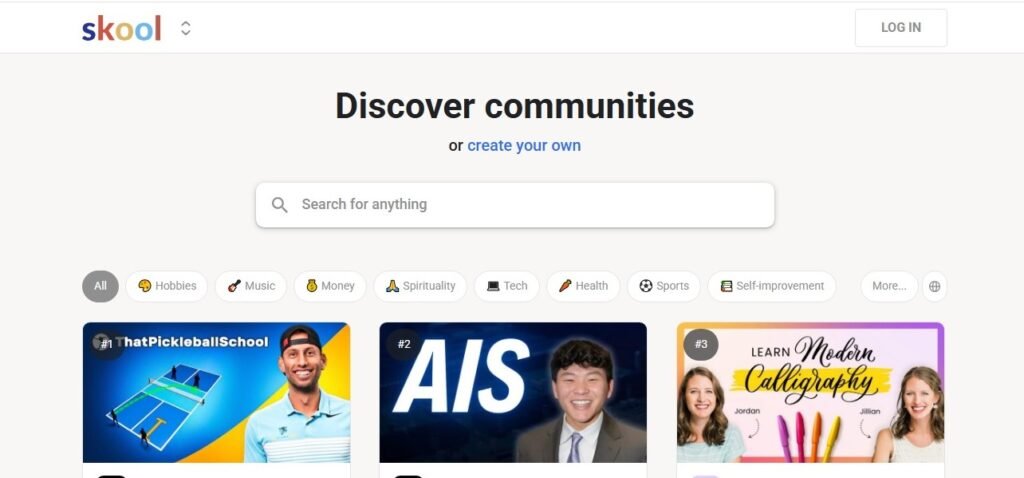
Pairing an online course with a subscription-based community model provides reliable, recurring revenue. Using platforms like SKOOL, educators can offer monthly access to a resource library, live Q&A sessions, or dedicated group support related to their teaching niche. This predictable revenue stream is considered the most sustainable form of passive income.
15. Creating Micro-Courses on Skillshare/Udemy
These marketplaces offer an accessible entry point for content creators. Udemy provides scale and promotion, while Skillshare pays royalties based on the number of premium class minutes watched, rewarding engaging content.
These platforms are often strategically utilized as testing grounds before migrating successful, high-performing content to a proprietary platform like Teachable for greater control over branding and profit margins.
16. Audio/Video Transcriptionist for Educational Content
This flexible, remote opportunity involves transcribing lectures, interviews, or professional development materials, requiring attention to detail and strong language skills.
17. Self-Publishing Children’s Books or Educational Comics
Educators with a flair for storytelling can leverage their understanding of student engagement to create original fiction or nonfiction content aimed at young readers, distributing widely through digital self-publishing channels.
Table: Online Course Platform Comparison
| Platform | Best For | Pricing Model Example | Passive/Active Blend |
| Teachable | Building a branded online school | From $29/month + 2% transaction fee | High Passive (High marketing effort) |
| Udemy | Launching a first course/Marketplace Reach | High revenue share (up to 63% on sales) | Medium Passive (Low setup, competitive) |
| Outschool | Live K-12 group classes | Platform handles payments/listings | High Active (Scheduled live classes) |
| Podia | Selling digital products and memberships | From $33/month + 5% fee | High Passive (Focus on resources/community) |
Category 3: High-Tier Consulting & B2B Services
This category involves leveraging institutional knowledge and experience to advise other organizations, commanding high rates typically associated with professional consulting contracts.
18. Curriculum Development Consultant
Experienced teachers and administrators are uniquely qualified to advise school districts, EdTech companies, or curriculum publishers on instructional design and program efficacy.
While the average hourly rate for a Curriculum Developer is approximately $25.59 per hour, highly specialized Curriculum Consultants can earn significantly more, with the 75th percentile reporting up to $183 per hour.
This discrepancy highlights that consultants who provide strategic program evaluation and alignment with state standards are valued much higher than those who merely perform routine content writing.
19. Specialized Grant Writing
Educators possess intimate knowledge of the funding needs within schools and the operational discipline required to follow complex application procedures. Focusing on educational grants for charter schools, specific district programs, or non-profits is a lucrative niche.
Funding For Good notes that intermediate grant writers can typically charge $50–$100 per hour, while expert grant writers, particularly those specializing in securing complex federal or government funding, can command between $150 and $250 per hour.
20. Instructional Designer (Corporate/Training)
Teachers are experts in designing sequential, engaging learning experiences. This skill is directly transferable to the corporate sector, where businesses constantly require training programs for employees, focusing on adult learning principles and occupational training.
21. Educational Data Analyst/Accountability Consultant
Teachers skilled in interpreting assessment data and compliance requirements can consult with smaller districts or private schools, assisting with the design of internal assessments, analyzing performance metrics, and managing accountability reporting. Specialists in this field typically charge rates between $125 and $150 per hour.
Find out 25+ top tech skills for non-tech professionals.
22. Professional Development Workshop Leader
Educators can be contracted to lead customized professional development sessions for other teachers on high-demand topics, such as effective classroom management techniques, advanced EdTech integration, or specialized instruction methodologies. This can be priced either hourly ($110 per hour for coaching) or on a project basis, with workshops ranging from $99 to $999 per session.
23. Subject Matter Expert (SME) Content Creation
Many educational technology firms, specialized academic publishers, and corporate training departments hire teachers to serve as Subject Matter Experts, ensuring content is accurate, pedagogically sound, and aligned with educational standards.
Category 4: Organizational Proficiency & Local Gigs
These options prioritize the leveraging of administrative, organizational, and interpersonal skills for flexible, quick-start income generation that fits around the school-year schedule.
24. Virtual Assistant (VA) for Edu-Startups
The superior organizational and administrative skills developed in the classroom make teachers exceptional candidates for Virtual Assistant roles. While general VAs might earn $10–$20 per hour 3, teachers should strategically market themselves as specialized Course Creation Support VAs.
This specialized role helps busy education entrepreneurs with content organization (e.g., developing slide decks, managing Google Drive systems, or assisting with tech troubleshooting), tasks that leverage their core expertise and justify higher compensation.
25. Specialized Remote Bookkeeping
A teacher’s inherent diligence, organizational capabilities, and attention to detail are ideal for small business bookkeeping. With basic knowledge of software like QuickBooks, teachers can offer remote services for $25–$40 per hour, capitalizing on flexible evening and weekend hours.
26. Proofreader and Copyeditor
Proficiency in grammar, usage, and style, honed through years of grading papers, makes teachers highly qualified proofreaders and copyeditors. Clientele can include academic authors, corporate marketing departments, or businesses requiring polished documentation.
27. High-End Pet Sitting/Dog Walking
This gig work, often managed through platforms like Rover, requires minimal startup investment and offers flexible hours. For many teachers, it provides a low-stress, physical outlet—a necessary contrast to the mental demands of the classroom—while meeting the professional standard for ethical, decent work.
28. Weekend Academic/Art/STEM Camps Organizer
Teachers can design and run short, engaging camps during school breaks or on weekends. These specialized programs can use rented local venues like libraries or community centers.
29. Educational Event Coordinator
The ability to manage complex logistics, coordinate multiple stakeholders, and handle scheduling—skills refined by coordinating field trips and school events—transfers seamlessly to event coordination. Services can include planning district conferences, school fundraisers, or large community education programs.
30. Renting Out Extra Space or Property
This is a straightforward path to passive income through real estate investment. Examples include renting out an extra room on a short-term basis (e.g., Airbnb) or renting a garage or spare commercial space for storage. Teachers can strategically maximize seasonal income by listing their primary residence as a short-term rental during the long summer break.
Implementation Roadmap: The Strategic Launch Sequence
A phased approach mitigates risk and ensures sustainable growth:
Phase 1: Compliance and Quick Cash Flow
The absolute first step is the mandatory contract review and securing written prior approval for the selected side hustle. Concurrently, the educator should launch their highest-rate active hustle (e.g., niche consulting or test prep tutoring) to rapidly generate initial cash flow. This revenue stream is essential for creating the financial capital required for subsequent investments.
Phase 2: Asset Building
A dedicated portion of the high-yield active income and available time must be systemically invested into building scalable passive assets. This includes the creation of a TPT product line, recording initial course content, or launching the foundational elements of a niche blog.
Phase 3: Scale and Automation
Once the passive assets begin generating sustainable revenue, the educator should reinvest that income into scaling the business. This might involve upgrading to a higher-tier online course platform (e.g., Teachable Pro for zero transaction fees 33), hiring specialized Virtual Assistant support to manage administrative tasks 9, or ramping up targeted marketing efforts.
This final phase strategically frees the educator’s time, allowing them to focus either on higher-value asset creation or better balance their primary teaching duties.
Conclusion on the Top Side Income Ideas for Teachers
The analysis demonstrates that the teacher’s path to financial ascendancy lies not in general gig work but in the strategic identification and ethical application of their professional capital to niche external markets.
By focusing on highly specialized services—such as advanced test prep, educational grant writing, or curriculum consulting—educators can successfully transfer their skills to the open market, commanding high hourly premiums that far exceed standard salaried rates.
The most resilient financial model for the professional educator requires treating high-yield active income streams as seed capital to fund the creation of scalable passive assets (digital resources, online courses).
This strategic conversion transforms the educator’s income trajectory from a fixed, time-constrained salary to a diversified, resilient, and entrepreneurial structure, enabling financial freedom and professional resilience while maintaining the highest ethical standards expected of a role model.
FAQs on Top Side Income Ideas for Teachers
Find answers to some frequently asked questions.
Passive income, on the other hand, comes in with little ongoing effort after the initial setup. Examples include rental income, dividends, digital products, or automated online businesses.
United States: Generally allowed, as long as the side job doesn’t interfere with their teaching duties or violate conflict-of-interest rules. Many teachers tutor, coach, freelance, or run small businesses legally. Some districts may require disclosure.
UK & EU: Typically permitted, but teachers may need to inform their employer if the side job is substantial or could affect performance.
Other jurisdictions: Regulations differ, but the general principle is that side income is acceptable if it does not disrupt school responsibilities or create ethical conflicts.
Teachers should always check local laws and school policies to be safe.
Freelancing (writing, design, editing, coding)
Selling digital products (ebooks, templates, lesson plans)
Online tutoring or teaching
Dropshipping or e-commerce
Affiliate marketing
Part-time consulting in your area of expertise
The best side income is one that fits your strengths and can grow over time.
Freelancing in the evenings or weekends
Creating digital content or products
Renting out unused items or space
Doing online micro-tasks
Teaching or tutoring virtually
Starting a small online store
Leveraging skills like writing, design, or social media management
The key is choosing something manageable that doesn’t lead to burnout.
Tech freelancing (web design, development, data analysis)
Graphic design and branding
Copywriting and content creation
Virtual assistance for businesses
Online tutoring in high-demand subjects
Real estate photography or videography
Selling specialized digital products
Consulting in your professional field
Social media management
Many of these can grow into full-time businesses if you choose to scale them.
Still have more questions?
Write to AscendurePro!
Contact UsJoin the Career Intelligence Community
Get exclusive data insights, downloadable tools, and mindful career strategies delivered monthly — no fluff, no spam.