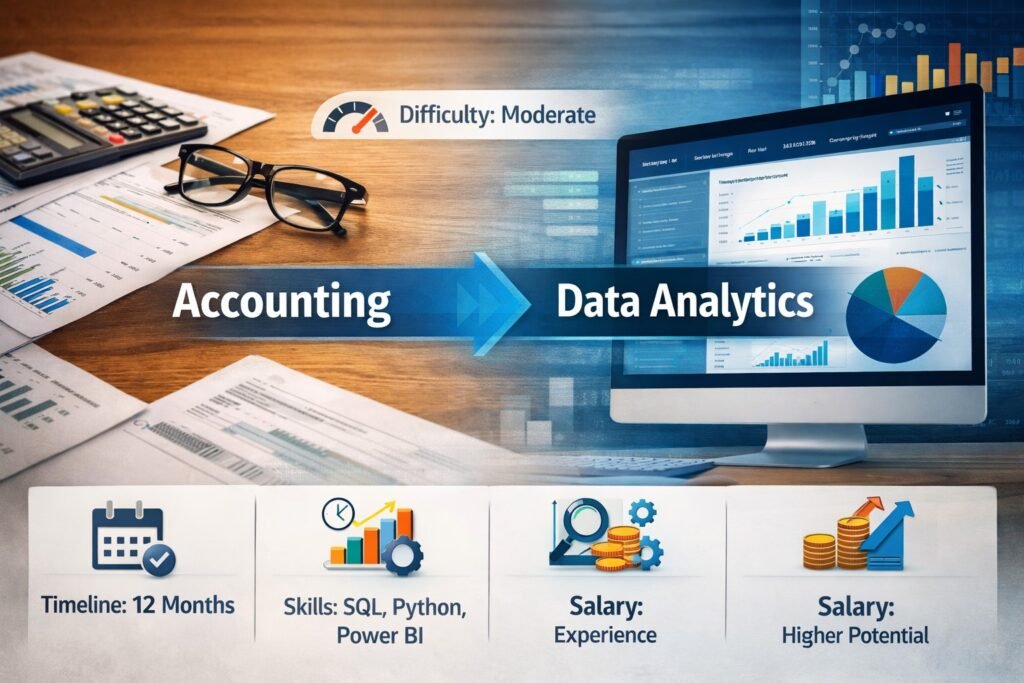
The modern labor market is undergoing a structural shift comparable in magnitude to the mechanization eras of agriculture and manufacturing, driven by the rapid deployment of artificial intelligence (AI), automation technologies, and other in-demand essential tech skills.
For the non-technical professional—the manager, the educator, the nurse, the marketer, the HR specialist, and the finance director—digital skills have transitioned from being specialized assets to universal, foundational requirements for career stability and organizational success.
Contents
The Essential Tech Skills Dividend: Quantifying the Payoff
The necessity of technical competence across the enterprise is no longer theoretical. Analysis by the National Skills Coalition confirms that digital skills are pervasive, required in 92% of all jobs analyzed, thereby dispelling the legacy misconception that advanced demand exists primarily within the dedicated tech sector.
This digital proficiency offers a clear, measurable economic advantage. Data indicates a significant and quantifiable monetary reward for acquiring these competencies, which is often referred to as the “digital skills dividend.”
Professionals who qualify for jobs requiring just one digital skill earn an average of 23% more than those in roles requiring none.
This financial incentive accelerates dramatically as complexity increases; moving to a role that demands at least three digital skills can increase a worker’s average pay by 45%. This substantial wage difference confirms that digital capability acts as a critical lever for both economic mobility for individuals and enhanced productivity for organizations.
The acceleration of change, catalyzed by recent global disruptions, necessitates that leaders fundamentally reevaluate their workforce capabilities. According to r/ITManagers-Reddit, the sheer pace of technological evolution has led the World Economic Forum (WEF) to estimate that approximately 50% of the global workforce will require substantial reskilling by 2025. This strategic imperative requires targeted investment to close the skill gap, especially since the existing digital divide disproportionately affects workers of color, low-income individuals, and rural residents due to historic underinvestment and structural inequities.
For organizations seeking resilience and sustainable growth, addressing this skills gap through internal training programs and strategic resource allocation is a fundamental strategy for increasing corporate productivity and maintaining market competitiveness. The evidence suggests that the digital skill gap is fundamentally an economic and strategic issue before it is a purely technical one.
Interested in Strategic Output Maximization? Check our Optimized Professional Toolkit.
The Five Pillars of the Modern Non-Tech Professional
To navigate this landscape successfully, the top 50 essential tech skills for non-tech professionals can be systematically categorized into five interdependent pillars. This structure ensures a holistic approach, fostering not just technical capability, but an adaptable digital mindset.
| Pillar | Primary Focus | Strategic Function | Skills |
| Generative AI Literacy and Prompt Mastery | Interacting with AI for efficiency and governance | Content, Research, Ethical Control | 10 |
| Data Fluency, Analysis, and Storytelling | Translating raw data into strategic direction | Financial Analysis, Reporting, Decision-Making | 15 |
| Cloud, Automation, and Workflow Optimization | Streamlining internal processes and resource utilization | Operations, HR, Scalability, Cost Reduction | 10 |
| Cybersecurity, Governance, and System Safety | Protecting assets and ensuring legal compliance | Risk Management, Compliance, Business Continuity | 5 |
| Digital Strategy and Agile Methodology | Managing change and designing user-centric processes | Project Management, Innovation, Organizational Agility | 10 |
Pillar I: Generative AI Literacy and Prompt Mastery (10 Skills)
Coursera notes that Generative AI (GenAI) is rapidly becoming a fundamental requirement across diverse professional roles. The key shift enabled by GenAI is the democratization of advanced computational power, which allows non-technical staff to leverage complex AI capabilities without reliance on specialized data scientists or developers, writes SqCentre.
Foundational AI Concepts and Application
1. Generative AI Fundamentals
Professionals must grasp the core mechanism of Large Language Models (LLMs) and understand how they fundamentally transform traditional knowledge work. This involves recognizing the capabilities and limitations of the technology to integrate it responsibly into daily tasks.
2. Using AI for Rapid Content Creation and Strategy
GenAI tools are powerful allies in boosting productivity. They can be leveraged for brainstorming, drafting marketing campaigns, and developing niche-specific content.
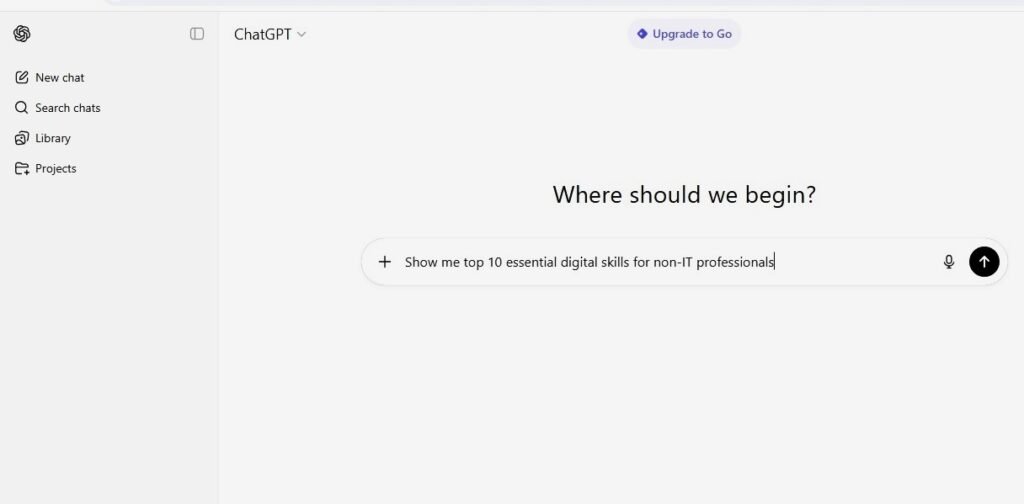
For instance, Nathaniel Moss—a writer on Medium and also a professional in the fishing industry utilized prompt engineering to generate effective ideas for social media marketing, including tips for success on platforms like TikTok.
3. Using AI for Regulatory and Compliance Research
In functions such as Human Resources (HR) and Legal, GenAI tools provide immediate utility for essential, time-consuming research. Line managers can employ these tools to instantly retrieve and summarize complex information, such as the compliance requirements for a specific labor law or the average compensation rate for a defined role in a given city.
4. AI Tool Testing and Observation
Effective interaction with AI requires an iterative mindset. Based on Dayta Marketing’s guide on Generative Engine Optimization, professionals must learn to treat AI interaction as a continuous feedback loop, adopting an iterative approach where they test and observe the AI’s results, acting like the target audience to validate the generated output for clarity, helpfulness, and accuracy.
5. Interacting with AI-Powered Internal Applications
Modern enterprises are embedding specialized AI user interfaces (UIs) directly into their existing internal software. Proficiency is required in using these integrated tools (such as Vee, mentioned in the context of leadership insights, or specialized platforms like Superinterface) for immediate tasks like real-time data analysis, summarization, or internal knowledge retrieval during high-stakes meetings.
Advanced Prompt Engineering (5 Skills)
Prompt engineering is the technique of structuring inputs to AI models to elicit desired, high-quality outputs. This skill set is the crucial democratization tool that provides non-technical staff with sophisticated control over AI capabilities. Studies suggest that effective prompt engineering can improve the quality of AI output by up to 300%.
6. Capacity and Role Definition
This foundational prompt engineering technique involves instructing the AI to adopt a specific persona or area of expertise (e.g., “Act as a seasoned merger and acquisition advisor” or “Adopt the persona of a critical design editor”). This immediately elevates the output quality by aligning the tone, vocabulary, and perspective with professional standards.
7. Using Precise Language and Quantification
To counter the AI tendency toward ambiguity, professionals must employ specific language and parameters in their requests. Quantifying requests whenever possible maximizes the relevance and specificity of the output. For example, instead of asking the AI to “Write a long poem,” the specific request should be, “Write a sonnet with 14 lines that explores themes of love and loss”.
8. Task Chunking (Breaking down Complexity)
A prompt engineering for AI guide by Google Cloud, notes that complex business requests often yield poor results if posed as a single, massive query. This skill involves decomposing large, multi-stage tasks into a sequential series of smaller, manageable steps. This tactic allows the AI to focus on one objective at a time, dramatically improving performance and reliability when solving multi-stage business problems, such as requesting a detailed marketing plan.
9. Explainability Tools Proficiency
As organizations rely more heavily on AI for high-impact decisions (e.g., credit approvals, hiring shortlists), non-technical professionals need the capability to interpret and justify AI outcomes. Proficiency in explainability tools is becoming crucial for ensuring transparency and maintaining organizational trust in automated processes.
10. Bias and Ethical AI Review
The transition of GenAI power to the business user means the strategic governance of AI output is now decentralized. The crucial ability to review AI outputs for systemic bias, ethical concerns, or unintended social consequences is paramount, particularly when using AI in sensitive areas like HR or financial services. A core operational responsibility is ensuring the responsible deployment of GenAI.
This decentralized control means that the ability to prompt effectively is not just an efficiency gain; it is a new mechanism of strategic governance. Since a poorly directed AI can easily generate legal or ethical risks, the non-technical expert must serve as the essential human filter for the technology, making skills like Ethical AI Review necessary mechanisms for organizational security.
Pillar II: Data Fluency, Analysis, and Storytelling (15 Skills)
Data analysis is recognized as one of the most transformative, high-income skills available today, as businesses increasingly rely on data to make informed and profitable decisions. Non-technical experts must move beyond basic reporting to actively collect, interpret, and communicate data that solves defined business problems.
Spreadsheet Mastery for High-ROI Analytics (6 Skills)
Despite the rise of dedicated Business Intelligence (BI) platforms, spreadsheet software, particularly Microsoft Excel, remains the single most important analytical tool for the majority of non-coders, writes Academyxi. Mastering its advanced functions provides immediate, high-return analytical capability.
11. XLOOKUP Proficiency
The modern alternative to legacy functions like VLOOKUP and HLOOKUP, XLOOKUP provides more flexible and accurate vertical and horizontal data retrieval. Mastering this function drastically improves data reconciliation speed and report reliability.
12. INDEX-MATCH Combination
While XLOOKUP is newer, the INDEX-MATCH combination remains a highly flexible and powerful duo for data lookup, often providing better performance and greater versatility than XLOOKUP in complex array scenarios, notes Agcapitalcfo.
13. Conditional Summarization (SUMIFS, COUNTIFS, AVERAGEIFS)
These functions enable professionals to apply multi-criteria logic to rapidly calculate conditional metrics. This is essential for financial reporting and operational analysis, allowing users to calculate, for example, the sum of sales for a specific product in a specific region during a defined time window.
14. Error Handling (IFERROR and ISERROR)
High-quality business reports require professional presentation. The ability to implement error-handling functions like IFERROR ensures that complex formulas replace technical error codes with understandable feedback, greatly improving the trustworthiness and readability of reports.
15. Data Transformation with Power Query and Power Pivot
These advanced functionalities within Excel allow users to connect to, cleanse, shape, and model data from multiple disparate sources. This touches upon the foundational principles of Extract, Transform, Load (ETL), and allows non-technical users to prepare data for analysis without relying on IT infrastructure.
16. Financial Modeling for Irregular Cash Flows (XNPV and XIRR)
For financial professionals, applying the XNPV (Net Present Value) and XIRR (Internal Rate of Return) functions is critical. Unlike their simpler counterparts, these functions provide the flexibility to evaluate financial scenarios that involve irregular cash flow intervals, essential for sophisticated investment and project evaluation.
Data Preparation and Foundational Analysis (5 Skills)
17. Information and Data Literacy
This foundational competency involves knowing how to acquire, evaluate, organize, and ethically use digital information. It requires going beyond basic computer skills to understand and manipulate technologies like advanced software and data storage to solve real-world problems.
18. Data Cleansing and Preparation
Raw business data is often inconsistent, fragmented, and sourced from different systems. The ability to identify these inconsistencies and transform the data into a single, reliable dataset is a non-negotiable prerequisite before any accurate visualization or analysis can begin.

19. Basic SQL (Structured Query Language)
Structured Query Language (SQL) is the standard language for managing relational databases. Non-technical professionals should acquire the ability to execute basic querying commands to extract relevant data subsets themselves, significantly reducing reliance on IT support for routine reports and analyses.
20. Scenario Analysis and Forecasting
Organizations are moving away from static reporting. Financial Planning and Analysis (FP&A) teams require the capability to utilize techniques like scenario analysis and forecasting to predict future trends and conduct “what-if” planning for budgeting and long-range strategies. For example, Walmart modernized its financial planning by transitioning from static annual budgets to dynamic, driver-based forecasting to improve forecast accuracy and responsiveness to supply chain and inflation pressures.
21. Statistical Analysis Fundamentals
Sound data-driven decisions require an understanding of underlying statistical concepts. Professionals must be able to interpret descriptive statistics, recognize correlation (e.g., diagnosing multicollinearity), and understand the difference between correlation and causation to ensure that data insights are scientifically sound and not misleading.
Visualization and Data Storytelling (4 Skills)
The technical complexity of data is irrelevant if the findings cannot be communicated clearly to stakeholders. The skill of translating analysis into actionable business communication is paramount.
22. Dynamic Dashboard Creation
According to Domo, proficiency in creating real-time, interactive dashboards using industry-leading tools like Power BI, Tableau, Domo, or Looker is essential. This capability allows professionals to transform complex data into visually appealing dashboards and reports, enabling stakeholders to interact directly with the metrics and derive faster insights; ONLC writes on the benefits of Power BI for career growth.
23. Interpreting AI Visuals and Smart Narratives
Modern visualization platforms are integrating AI capabilities. For instance, Power BI offers AI Visuals and Smart Narratives, which use machine learning (ML) to automatically generate text summaries of key findings. This skill involves utilizing and interpreting these automated narratives to speed up data interpretability and reduce manual effort in reporting.
24. Data Storytelling and Narrative Creation
Data storytelling is the ability to distill complex findings into an engaging, simple, and insightful narrative tailored for the audience. This involves using visualizations to connect data points to real-world business outcomes, avoiding jargon, and defining the key takeaway of the analysis.
25. Asking Meaningful Questions (The Five Whys Framework)
Critical thinking involves moving beyond surface-level data to uncover root causes and actionable implications. Professionals must develop the habit of asking layered, probing questions that challenge assumptions. Employing structured techniques like the “Five Whys” framework helps to systematically explore underlying causes and open new avenues for data analysis.
The increasing reliance on tools like Power BI in financial roles such as FP&A and investment banking demonstrates a clear trend: the high demand for data visualization skills confirms that technical complexity must be accompanied by human interpretability. This convergence means that professionals are transitioning from merely reporting metrics to becoming strategic partners who use data to drive organizational agility.
Pillar III: Cloud, Automation, and Workflow Optimization (10 Skills)
This pillar is dedicated to leveraging the efficiencies of cloud services and Low-Code/No-Code (LCNC) platforms to automate repetitive tasks, streamline operational workflows, and increase speed across the organization.

Cloud Architecture Fundamentals (3 Skills)
Understanding basic cloud concepts is necessary for resource allocation, security discussions, and managing modern Software-as-a-Service (SaaS) tools.
26. Differentiating Software-as-a-Service (SaaS)
Professionals must clearly understand the SaaS model, which delivers ready-to-use applications (such as email, CRM, or collaboration platforms) that are fully managed by the provider via a web browser. This understanding informs organizational procurement decisions and application adoption strategy.
27. Differentiating PaaS and IaaS
It is essential to recognize the differences between Platform-as-a-Service (PaaS), which provides a managed environment to speed up application development, and Infrastructure-as-a-Service (IaaS), which offers fundamental computing infrastructure like virtual machines. This recognition is vital for contextualizing IT resource conversations and cloud spending, as many organizations use a mix of these models to balance control and efficiency.
28. Cloud Governance and Management Awareness
Non-IT roles, particularly those involved in project management or procurement, must have foundational knowledge of how data is governed, secured, and accessed in multi-cloud or hybrid cloud environments. This includes understanding the principles of responsible AI and basic API management, typically validated through foundational certifications.
Low-Code/No-Code (LCNC) Application and Workflow Building (7 Skills)
LCNC platforms are accelerating internal innovation by empowering business users to create or automate solutions directly, significantly reducing dependency on central IT teams.
29. Workflow Automation Tool Proficiency (Zapier/Workato)
Mastery of integration platforms like Zapier, Workato, or Tray.io allows professionals to set up conditional logic and triggers that connect thousands of disparate applications. This automates routine workflows, such as data synchronization between sales and accounting, eliminating redundant data entry and reducing bottlenecks.
30. No-Code Application Building
Using purely no-code platforms like AppSheet or Genatron allows business users to quickly build functional, departmental applications, often by turning spreadsheet data into user-friendly apps or using plain English prompts.
31. Low-Code Enterprise Development (PowerApps/OutSystems)
For more complex needs, low-code platforms like Microsoft PowerApps or OutSystems are essential. These tools offer enterprise-grade infrastructure capable of handling millions of records, providing better scalability and integration, particularly when leveraging premium connectors and databases like Microsoft Dataverse.
32. Retool for Internal Tools
Proficiency in using systems like Retool is valuable for rapid development of bespoke internal management interfaces. This capability allows users to connect directly to existing core data sources (PostgreSQL, MySQL, etc.) to quickly assemble dashboards and administration tools without traditional front-end coding.
33. API Management and Data Integration Awareness (ETL)
In hybrid cloud architectures, data must frequently move between on-premises and cloud environments. Professionals must recognize the critical role of Application Programming Interfaces (APIs) for data exchange and understand that formal Extract, Transform, Load (ETL) processes are often required to ensure clean, compliant data integration across platforms.
34. Automating HR Compliance and Onboarding
The application of workflow automation in Human Resources yields powerful returns. Automation solutions can streamline tasks such as compliance tracking, onboarding reminders, and access management. Case studies demonstrate significant savings: automating promotion-related tasks saved IBM 12,000 hours in a single quarter, reducing processing time from 10 weeks to 5 weeks, while Dell achieved up to 85% increased HR productivity by automating 30 key processes. A Deloitte study, as reported by CASO further found that HR automation typically increases operational efficiency by 30%.
35. Automating Project Capacity Reporting
Leveraging integrated project management tools (Jira, Asana) to their full potential means utilizing features for automated status updates, alert management, and real-time reporting on team capacity and commitments. This reduces the managerial overhead associated with manual tracking and improves predictability.
The shift toward LCNC platforms grants business units considerable strategic autonomy to solve their own localized IT needs. This power, however, necessitates a corresponding adoption of governance skills.
If business professionals are building mission-critical applications or workflows, they must possess the foundational cloud governance and security awareness (Skills 28 and 33) previously held solely by IT, ensuring security standards and scalability are maintained across decentralized application development.
Pillar IV: Cybersecurity, Governance, and System Safety (5 Skills)
As organizations become deeply interconnected, every employee represents a critical link in the security chain. Cybersecurity skills for non-tech roles are paramount, representing a fundamental mechanism of risk management.
36. Foundational Digital Safety and Cyber Hygiene
This involves mastering essential defensive behaviors, including maintaining strong, unique password policies, implementing Multi-Factor Authentication (MFA), and recognizing social engineering tactics like phishing. According to ISACA Cybersecurity, access to government resources and industry-specific training platforms can help build and reinforce these critical skills.
37. Data Privacy and Regulatory Standards
Professionals must possess a robust knowledge of organizational data handling protocols, especially concerning complex cross-platform data management and adherence to international regulations (such as GDPR or CCPA). This knowledge is essential for ensuring compliant handling of sensitive data.
38. Cross-Platform Data Security
Understanding the security implications of integrating data between various environments—such as combining on-premises systems with hybrid cloud environments—is crucial. This involves ensuring data security standards are applied consistently during API-based integration and ETL processes.
39. Risk Management Fundamentals
Risk management is the general skill of identifying, assessing, and mitigating operational and financial risks associated with technology implementation, digital change initiatives, and potential data breaches. Given that digital change initiatives frequently fail, the ability to anticipate and manage technological risk is highly valued.
40. Safety (System Integrity and Resilience)
PMC NIH highlights that “safety” is a top digital skill for future demand. This refers to the ability to protect systems and data from harm. It involves understanding the importance of routine system backup, disaster recovery procedures, and general awareness of physical and digital asset protection to maintain system integrity and resilience.
While perimeter security is managed by dedicated IT teams, human error remains the primary vulnerability in most organizations. The overwhelming demand for safety and security skills confirms that risk mitigation is now a cultural mandate, requiring that every employee operates as a proficient Digital Citizen who understands the ethical, legal, and social responsibilities inherent in a connected environment.
Pillar V: Digital Strategy and Agile Methodology (10 Skills)
Modern organizational agility depends on adopting flexible strategic and methodological frameworks previously confined to software development teams. These skills ensure that change initiatives are continuous, iterative, and focused on user needs.
Agile Mindset and Frameworks (4 Skills)
What is Agile? Nifty Project Management defines Agile as an ideology emphasizing flexibility, iterative development, and responsiveness to change. Applying this mindset to non-software teams (Marketing, HR, Operations) dramatically increases alignment and efficiency, based on Lucid Software.
41. Agile Methodology Adoption
Understanding the core principles of the Agile philosophy—which prioritizes working increments over extensive documentation and rapid feedback over rigid planning—is necessary for modern project execution. Adopting this mindset increases team members’ sense of impact and provides greater visibility into future workloads.
42. Scrum Framework Application
Scrum is a popular framework that prescribes a specific set of practices to encourage teamwork and collaboration. Non-technical teams can utilize Scrum concepts, such as defining the role of the Product Owner (who represents the customer), organizing work into Sprints, and conducting defined meetings (dailies, retrospectives) to manage cyclical work, such as marketing content rollouts or large administrative projects.
43. Kanban Workflow Management
Kanban utilizes visual management tools (boards) to track work flows. This method is highly effective for operations and service teams, allowing them to visually limit work-in-progress (WIP), track bottlenecks, and optimize operational pipelines for continuous improvement.
44. Advanced Collaboration and Project Tracking Tools
Proficiency in leveraging comprehensive work management suites is vital for organizational efficiency.
Tools like Jira, Asana, and Microsoft Teams provide in-depth planning, collaboration, and execution capabilities, enabling teams to break down silos, manage portfolios, and streamline business processes across departments (e.g., HR, Finance, Marketing).
Design Thinking and Problem Solving (4 Skills)
Design thinking is a human-centered approach to innovation that ensures technological solutions align with real user needs. It provides a repeatable, structured way to address complex problems, which is a top skill demanded in the future workforce.
45. Design Thinking (Empathy-First Approach)
Every project under the design thinking model begins with a deep, empathic understanding of the end-user. Tools like empathy mapping help professionals capture the customer’s voice, ensuring that solutions are shaped around lived experiences rather than assumptions.
46. Iterative Experimentation and Prototyping
Design thinking promotes rapid iteration. Instead of waiting for a final, perfect solution, teams are encouraged to test rough ideas and prototypes early in the development cycle. This iterative testing significantly reduces the risk associated with implementing large-scale changes to products or internal processes.
47. Process and Operations Mapping
Design thinking principles can be applied directly to internal processes. Teams use this methodology to map existing workflows, identify pain points, and collaboratively create improvements that lead to more efficient operations and higher team engagement.
48. Strategic Problem-Solving
Problem-solving is identified as the number one skill for future demand. This involves the consistent ability to define, frame, and resolve complex digital or business challenges using analytical reasoning. Teams are encouraged to revisit how a challenge is defined, ensuring they target the root cause rather than treating symptoms.
Digital Communications and Web Literacy (2 Skills)
49. Content Management System (CMS) Proficiency
Professionals contributing to external or internal web presence must be familiar with managing content within platforms like WordPress or Drupal. This includes understanding the basic architecture, ensuring mobile responsiveness, and recognizing the importance of user experience (UX) fundamentals, writes Torrens University Austria.
50. Technical SEO Awareness for Content
For professionals venturing in content creation and marketing, awareness of Search Engine Optimization (SEO) fundamentals is essential. This includes understanding how technical factors—such as site loading speed, proper use of headings, and accurate metadata—directly impact a content’s visibility and performance in search engines.
Agile and Design Thinking methodologies represent the necessary “operating system” for modern organizational change. Applying Design Thinking to internal processes ensures that the efficiencies gained through technology—such as automation, GenAI, and data analytics—are correctly channeled toward solutions that truly benefit employees and customers, thereby ensuring that technical progress translates directly into customer-centric innovation.
Strategic Acquisition Pathways: Certifications and Conclusions
Acquiring these 50 essential tech skills requires targeted investment in high-value, non-coding credentials that validate competence across the five pillars. These certifications provide measurable proof of expertise in crucial domains, enhancing employability and strategic contribution.
Mapping Skills to Credentials
High-demand, foundational certifications are available that provide structured pathways for non-technical professionals:
| Credential | Provider | Focus Pillars | Duration/Cost Estimate | Key Skills Validated |
| AWS Certified Cloud Practitioner (CCP) | AWS | Cloud, Cybersecurity, Governance | 90 minutes; $100 USD exam fee | Cloud concepts, Security standards, Cloud governance |
| Google Data Analytics Certificate | Google (Coursera) | Data Fluency, Visualization, Spreadsheet Mastery | 3-6 months self-paced; $49/month | Data cleansing, Visualization, SQL fundamentals, Data ethics |
| Google AI Essentials | Google (Coursera) | Generative AI Literacy, Prompt Mastery | Self-paced; Included in Coursera subscription | Prompting Essentials, Generative AI Fundamentals |
| Google Cloud Digital Leader | Google Cloud | Cloud, AI Governance, API Awareness | ~1 month; Professional Certificate | Cloud governance, Responsible AI, API Management |
| Certified Associate in Project Management (CAPM) | PMI | Digital Strategy, Agile Methodology | Varies; $225-$300 exam fee | Project scope, Stakeholder communication, Agile practices |
Continuous Improvement: Strategies for Long-Term Relevance
Technological literacy encompasses more than proficiency in current software applications; it is defined as the ability to effectively apply and adapt knowledge across various technological platforms.
This fundamental adaptability—the capacity to learn new technologies and apply creative and practical skills to solve real-world problems—is the enduring meta-skill necessary for long-term career success.
For organizations—as Kahuna Workfoce Solutions notes— maintaining relevance requires auditing skills gaps using management tools to gain deep visibility into the workforce’s functional and technical competencies. This allows leaders to target reskilling efforts precisely, focusing resources on areas identified as future skill gaps, such as advanced problem-solving and collaboration.
The professional journey must align with the continuous improvement models found in strategic frameworks, such as the Plan, Do, Check, Act (PDCA) cycle. Simple, daily professional tasks—such as reviewing top-performing digital content regularly and iteratively refining successful AI prompts —are micro-examples of this strategic cycle in action. By embedding these feedback loops into daily operations, organizations and individuals ensure that new knowledge constantly shapes products and processes, preventing skills from becoming outdated in the rapidly evolving digital landscape.
Conclusions
The integration of the 50 essential tech skills described herein is not merely an optional upgrade but a fundamental requirement for professional viability and organizational resilience. The evidence is conclusive: digital fluency provides a significant, quantifiable economic benefit and is a necessity for strategic autonomy in LCNC development, data-driven decision-making, and risk management.
For non-technical professionals, the pathway to achieving expert status involves shifting the focus from purely functional tasks to applying strategic, human-centered frameworks (Agile, Design Thinking) alongside powerful technical tools (GenAI, Power BI). By mastering these competencies, professionals ensure they are not merely observers of digital transformation; but active and valuable drivers of it, ultimately enabling organizations to navigate the pervasive technological shift of the mid-2020s successfully.
Learn top in-demand digital skills for teachers.
FAQs
You may find the following questions and answers useful.
These skills have a low learning curve and can lead to more advanced tech opportunities.
Artificial Intelligence & Machine Learning; Data Science and Data Engineering; Cybersecurity; Cloud Computing; Software Engineering; Automation & Robotics; Product Management; UI/UX Design; Blockchain & Web3; Prompt Engineering.
Still have more questions?
Talk to us directly!
Contact UsJoin the Career Intelligence Community
Get exclusive data insights, downloadable tools, and mindful career strategies delivered monthly — no fluff, no spam.