The professional landscape is no longer defined by stability or linear progression, but by dynamic, exponential change, primarily driven by rapid technological adoption, geopolitical fragmentation, and shifting global economic priorities.
This environment means that continuous professional development is transitioning from a desirable competitive advantage to a necessary risk mitigation strategy. The foundational skills that ensured success five years ago are demonstrably insufficient today, creating a quantifiable risk profile for stagnant professionals.
High-agency professionals approach their careers as portfolios requiring strategic investment and diligent management. This investment mindset demands a shift from generalized career aspirations to empirical, financial questioning: How does one measure the verifiable Return on Investment (ROI) of time and capital allocated to professional development and career transitions?
The prevailing uncertainty around economic conditions and skill decay necessitates Verifiable ROI Frameworks that move past generalized assumptions and provide actionable, empirical metrics for advancement. This report establishes a data-driven framework for identifying high-value skills and strategically monetizing them.
Quick Summary
Key Takeaways
- The Insurance Value of Upskilling: Data from the World Economic Forum projects that approximately 39% of a worker’s existing skill sets will be transformed or become outdated by 2030. Continuous, specialized training now functions as a vital career insurance policy, evidenced by studies showing it significantly reduces career risk and the probability of early retirement.
- The GenAI Arbitrage Window: The wage premium for professionals who possess and actively use AI skills has accelerated dramatically, now commanding a 56% premium over non-skilled peers. This disparity represents the most significant current opportunity for rapid human capital appreciation, but the arbitrage window for achieving this premium is expected to narrow rapidly as basic AI literacy becomes ubiquitous.
- Specificity Outperforms Prestige: Generic Master’s degrees often fail to deliver financial returns, with analysis showing that 40% of Master’s programs result in negative Net Lifetime Earnings (NLE). Strategic professionals must prioritize highly specialized, market-aligned credentials (such as Cloud Architecture or specialized PMI certifications) or accelerated pathways like bootcamps, which offer a proven 14-to-18-month investment break-even point.
- Mobility is the Multiplier: Career inertia actively suppresses real wage growth; conversely, 60% of job switchers realize real earnings increases, even during periods of high inflation. Strategic career transition into high-growth, high-demand sectors (such as Engineering, Cybersecurity, and specialized data roles) acts as a powerful leverage tool for realizing maximum salary potential and overcoming organizational compensation ceilings.
- Value Articulation is Monetization: Technical expertise must be translated into quantifiable financial impacts—specifically revenue growth, cost containment, or risk mitigation. Utilizing structured communication frameworks, such as STAR or CAR, to rigorously quantify efficiency gains and project results is a non-negotiable step for negotiating high-level compensation and demonstrating verifiable professional ROI.
Navigation
A. The Economic Imperative: Measuring Career Risk and Reward
1. Understanding Human Capital Risk in the Digital Decade
The rapid acceleration of technological change is fundamentally redefining the lifespan and utility of professional competencies.
This environment necessitates a dynamic view of workforce planning, where skill acquisition is not a periodic event but a constant process of adaptation and renewal.
The Velocity of Skill Obsolescence
The single most sobering data point for modern career longevity involves the pace of skill obsolescence. The World Economic Forum—as revealed by The Interview Guys on the state of career longevity —projects that 39% of workers’ existing skill sets will be transformed or become entirely outdated over the 2025–2030 period.
This rapid rate dictates a defensive, dynamic approach to professional workforce planning. The pace of change creates “skill gap inflation,” where merely maintaining the current level of competence requires continuous, calculated effort. Studies indicate that the requirements for skills within a single job increase by an average of 10% year-over-year.
This phenomenon defines the baseline risk level for any professional: failure to invest means risking close to 40% of one’s current professional value over the next five years. This structural risk mandates that investment in human capital must be viewed through the lens of protection against involuntary depreciation, shifting the focus from only earning more to the equally critical goal of losing less.
The cost of training is therefore justified by the cost avoidance of unemployment or severe salary erosion, aligning skill acquisition with a robust career insurance policy against forced, involuntary career changes—notes PMC-NIH on involuntary career changes.
The Insurance Value of Continuous Professional Development
The investment in continuous learning functions as a critical career insurance policy against involuntary job loss and reduced earning potential. Data confirms a statistically significant correlation between dedicated training and reduced career risk.
Longitudinal studies have shown that employees who undergo professional training experience a lower rate of early retirement compared to those who do not.
Furthermore, rigorous, subject-specific professional development programs can dramatically stabilize a professional’s tenure. One study tracking the effects of robust developmental programming found that participation increased the odds of career retention by a staggering 166%. Participation also increased the odds of school retention (in an education context) by 48%.
This demonstrated link between training expenditure and dramatically increased retention reveals that continuous training is, functionally, a form of career security, protecting against the substantial economic costs associated with forced involuntary career changes or unemployment spells.
For the ambitious professional, the financial cost of strategic training is invariably dwarfed by the massive economic and psychological cost of extended unemployment or severe salary stagnation.
2. Frameworks for Quantifying Professional Development ROI
To evaluate professional investments rigorously, high-agency professionals must employ analytical models that convert competence gains into verifiable monetary returns, moving beyond simple qualitative measures.
The Phillips and IMPACT Models: Converting Mastery to Monetary Value
Standard training evaluation often relies exclusively on easily measured factors, such as learner engagement or course completion rates (Level 1 metrics).
To calculate true economic ROI, professionals must adopt advanced, rigorous measurement frameworks, such as the Phillips ROI Methodology or the IMPACT Framework.
These models are used across publicly traded businesses and governments to link learning programs directly to measurable business results.
The key metric utilized by these frameworks is the Mastery Score, which tracks the percentage improvement from a baseline across core competencies, measured in realistic workplace scenarios rather than simple knowledge recall.
For instance, if customer service representatives averaged a 65% score on scenario-based conflict resolution at baseline and achieved 89% post-training, this 24 percentage-point improvement represents a 37% relative mastery improvement ($24/65$).
The rigor of the Phillips Methodology then moves to isolate the effect of the program, convert the performance data into currency, and identify intangible benefits (such as improved morale, faster time-to-promotion, or reduced risk), which are essential for a complete picture of value.
Calculating Net Lifetime Earnings (NLE) ROI
The ultimate financial measure of a career investment is its Net Lifetime Earnings (NLE) ROI. According to FREOPP on the worth of grad school, NLE ROI is defined as the total projected increase in lifetime earnings expected from the investment (be it a degree, certification, or bootcamp), minus the direct costs (tuition, fees, and supplies) and, critically, the indirect costs, primarily the opportunity cost of forgone wages during study.
The use of median values, rather than means, provides a clearer, less skewed picture of the earnings distribution.
A foundational Bachelor’s degree offers substantial economic opportunity, conferring substantially higher earnings.
On average, a Bachelor’s degree is valued at $2.8 million in total lifetime earnings, representing an 84% premium over a high school degree.
However, NLE analysis reveals that the value is highly dependent on the program of study. The median Master’s degree, for example, increases lifetime earnings by $83,000 after subtracting costs. Yet, this high-level average obscures enormous variation: a shocking 40% of Master’s programs across the United States have a negative net financial value.
This principle necessitates that high-agency professionals abandon institutional prestige metrics and rigorously audit potential programs based on NLE. If a program requires a substantial opportunity cost (forgone wages) and high tuition, but the resulting salary premium is low, the NLE will be negative, regardless of the perceived status of the institution.
This rigorously supports shifting focus to high-demand, vocationally aligned fields; for instance, Master’s programs in engineering and computer science consistently boast NLE ROI above $500,000, reveals FREOPP.
B. High-Premium Skill Clusters: Data-Driven Selection
Strategic career investment requires identifying specific skill clusters that currently yield a disproportionately high verifiable ROI. This high return is typically a function of scarcity, criticality, and direct linkage to organizational revenue or risk mitigation.
1. Generative AI Literacy: The 56% Wage Premium
The rapid proliferation of Generative AI (GenAI) has created the single most dramatic salary arbitrage opportunity in the modern labor market. The ability to deploy and integrate AI tools has instantly become a high-premium skill.

The Accelerating Value of AI Skills
PwC’s 2025 Global AI Jobs Barometer provides definitive evidence of this accelerating value. The analysis reveals that workers with AI skills now command a massive 56% wage premium compared to peers in the same occupation who do not possess these skills. This represents a dramatic escalation from the 25% premium observed just one year prior.
This rapid growth signifies a massive supply-demand imbalance, indicating that AI competence is still a relatively scarce resource. The value proposition is urgent: the high premium confirms that the opportunity to gain disproportionate compensation is tied directly to early adoption and expertise, but this arbitrage window is expected to narrow rapidly as AI literacy becomes table stakes.
The benefits of integrating GenAI into daily workflow are highly measurable and span beyond mere compensation. Daily users of GenAI—as highlighted by PWC—report tangible benefits in productivity (92% versus 58% for infrequent users), job security (58% versus 36%), and salary realization (52% versus 32%).
The widening compensation gap between daily, effective users and infrequent users signals that integration frequency and demonstrable competence are the new drivers of job security and higher pay. Achieving this requires organizational redesign, not simply individual training, to redefine the human-machine partnership.
ALSO READ:
Top in-demand skills for teachers
Essential tech skills for non-tech professionals
Case Study: The ROI of Prompt Engineering Specialization
While early media reports detailing prompt engineering roles paying near $335,000 were often based on rare outliers and inflated equity components, a deeper compensation dataset still confirms strong median compensation for specialized roles.
Data collected from Glassdoor—and reported by media outlets such as AI CERTS—places the median Prompt Engineer pay near $125,000, with typical postings ranging from $100,000 to $212,000 across various sectors, and top-tier compensation packages reaching $375,000 at elite research labs.
The high valuation is paid for the expertise required to craft specific language and technical structure that helps non-human models understand human intent, guiding Generative AI tools to deliver optimal, high-leverage outputs.
The critical implication is that professionals must move beyond general usage to specialized implementation, such as advanced prompt engineering or integrating LLMs into niche, high-value business processes. This specialization is the necessary step to capture the outsized 56% premium before basic AI literacy becomes universally expected.
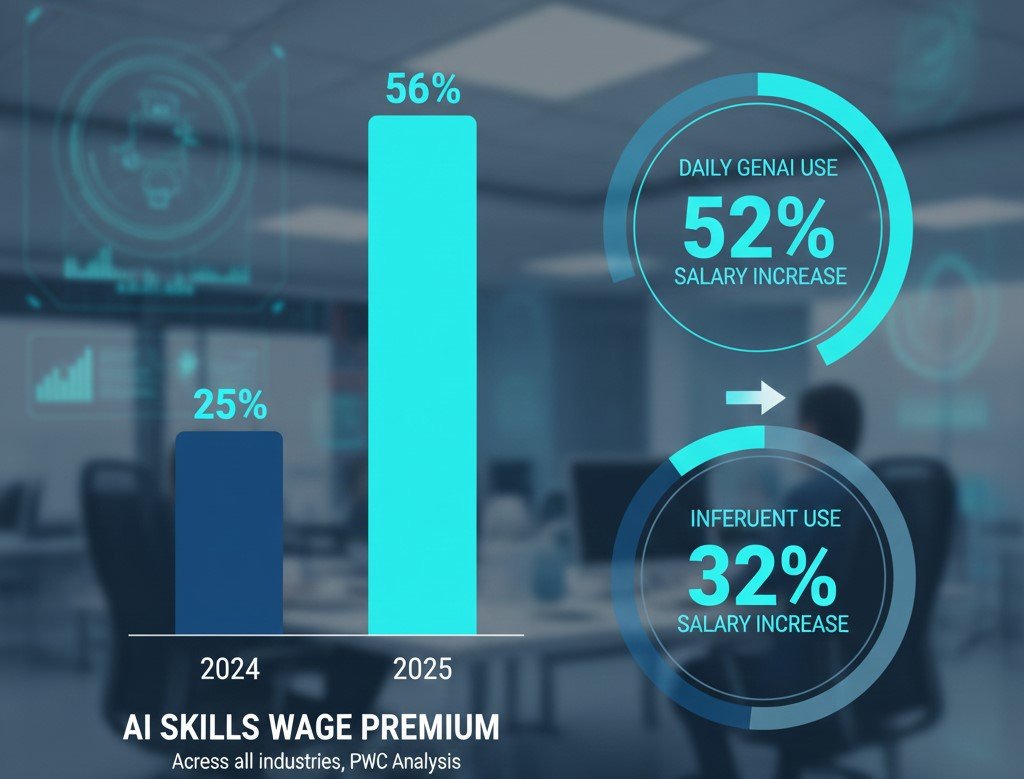
Table 1: Quantifiable Wage Premiums for High-Demand Technical Skills (2025 Projections)
| Skill/Certification | Reported Salary/Premium (Median/Average) | Investment Type | Source Premium/Benefit |
| AI/General Skill Literacy | 56% wage premium above non-skilled peers | Specialty Course/Daily Usage | Salary Increase, Job Security (58% vs 36% for daily users) 5 |
| Prompt Engineering Specialist | $125,000 – $212,000 USD (Median Posting) | Advanced Certification/Bootcamp | High-Leverage Programming/Optimal AI Output |
| PMP (Project Management Professional) | 20% to 35% salary boost | Certification/Course | Access to High-Stakes Roles (7+ figure budgets) |
| Google Cloud Professional Cloud Architect | $155,000 – $161,371 USD (Average Salary) | Advanced Certification | Critical Infrastructure Design/Security |
2. Strategic Project Leadership and High-Stakes Certification
Beyond emergent technologies, established professional certifications in high-leverage domains, particularly project and program management, continue to offer verifiable, substantial ROI by validating a professional’s ability to manage complexity and risk.
Quantifying the PMP Multiplier Effect
The Project Management Professional (PMP) certification remains a gold standard, offering a proven high-ROI credential. PMP-certified professionals consistently earn 20% to 30% more than their non-certified counterparts, with some international reports indicating salary increases of up to 35%.
For experienced professionals, this often translates to a five-figure annual salary increase immediately, allowing the cost of the exam and training to be rapidly offset.
More critically, the PMP functions as a necessary prerequisite for managing complex, high-stakes organizational initiatives.
According to iCertGlobal on why PMP certification is worth it, certified professionals are often entrusted with leadership roles overseeing budgets that frequently exceed seven figures.
The premium paid for PMP holders reflects their ability to standardize execution, mitigate project risk, and deliver outcomes reliably, translating directly into corporate financial benefit.
Beyond Foundational Credentials: Specialized PMI ROI
Strategic professionals are advised to look beyond the foundational PMP or basic Agile certifications toward specialized accreditations that focus on mitigating complex organizational risk, thereby justifying an even higher wage premium.
The Project Management Institute (PMI) offers advanced accreditations such as the PMI Risk Management Professional (PMI-RMP)® and the PMI Professional in Business Analysis (PMI-PBA)®.
These roles command a premium because they focus on proactive risk prevention and ensuring project outcomes are strictly aligned with strategic business goals, moving the professional from an executioner to a critical strategic advisor.
The highest premiums in management are paid not merely for delivering a project on time, but for protecting capital and enabling scalable business growth.
4. Cybersecurity and Cloud Architecture: Critical Infrastructure Value
In an increasingly digitized economy, the skills related to protecting data and managing distributed infrastructure have become non-discretionary corporate investments, resulting in highly competitive compensation.
Cybersecurity as a Non-Discretionary Investment
The cybersecurity field offers exceptionally competitive compensation across all experience levels.
Based on the cybersecurity salary 2025 report by EC-Council, entry-level job roles, such as SOC Analysts, start around $70,000, while senior executive positions like Chief Information Security Officer (CISO) routinely command salaries ranging from $160,000 to over $250,000 annually.
The high earning potential reflects the critical nature of these roles in protecting corporate assets and mitigating regulatory penalties.
For mid-level professionals, as Research.Com writes, salaries typically jump to between $80,000 and $120,000, particularly with the addition of higher-level certifications. The ability of specialized certifications like the CISSP to increase a professional’s salary by an additional $10,000 to $20,000 annually underscores the market’s reliance on validated, external proof of competence.
Other certifications, such as CEH and CISM, also provide a significant salary boost, particularly for ethical hackers and security managers.
Cloud Architect Certification ROI
Certifications focused on secure cloud infrastructure yield exceptional financial returns because they address the complex, high-risk challenges of modern digital transformation.
The Google Cloud Professional Cloud Architect certification is consistently recognized as one of the highest-paying technical credentials globally, with average salaries reported between $155,000 and $161,371 USD. Roles like Cloud Security Architect can command up to $185,000.
These high compensation levels are justified because cloud architects and engineers are responsible for designing and deploying secure, compliant infrastructure, which is mission-critical for every organization operating at scale.
The analysis of these salary premiums shows a clear pattern: the market prioritizes professionals who possess competencies related to risk mitigation, strategic design, and corporate security.
The strategic professional should aim to transition away from purely implementational roles toward those that interface technical expertise with executive-level financial risk analysis and planning.
C. Optimizing the Acquisition Pathway: Time-to-Profitability
The strategy chosen for acquiring high-value skills profoundly impacts the overall NLE ROI. A long timeline and high cost increase the opportunity cost of forgone wages, which can erode the financial benefit, even if the eventual salary is high.
1. Credentialing ROI: Bootcamp versus Graduate Degree Analysis
When evaluating formal education pathways, the concept of the breakeven point—the time required to recover the investment cost and forgone wages—becomes the definitive metric.
The Opportunity Cost of Time and Breakeven Point
Traditional academic pathways, such as a full-time Master’s degree, average two years of dedicated commitment and carry significant direct costs, often ranging from $40,000 to over $120,000.
This extended timeline substantially delays the accumulation of post-degree work experience, reducing short-term Net Lifetime Earnings according to Mincerian economic theory. Graduates may take three to five years to reach their ROI breakeven point.
In contrast, accelerated, vocational options, such as Coding Bootcamps, offer a rapid time-to-profitability. Typical costs range from $11,000 to $14,500.
Graduates frequently recover their full investment and reach the ROI breakeven point within a mere 14 to 18 months. DigitalDefynd on Bootcamp vs. degrees attributes this largely to a low debt burden and an average median salary boost of 51% compared to their pre-bootcamp earnings.
This quick financial turnaround demonstrates superior financial agility for career pivoting or rapid specialization. The low debt burden and quick break-even point provide a compelling ROI for individuals focused on rapid financial returns and minimal long-term liabilities.
The Master’s Degree Financial Audit
While accelerated options offer high short-term returns, the Master’s degree still holds immense NLE value in specific fields.
Lucrative professional programs, particularly in law, medicine, engineering, and specialized computer science fields, virtually guarantee high ROI, frequently exceeding $500,000 in NLE.
These fields feature clear vocational alignment and starting salaries ($80,000+ for many CS graduates) that quickly justify the high financial and time investment.

However, the analysis reveals the danger of prestige-seeking in credentialing. The fact that 40% of academic Master’s programs result in negative NLE necessitates that professionals adopt a highly selective, data-driven strategy.
This leads to the conclusion that high-agency professionals should implement a Dual-Track Credentialing Strategy:
- utilizing rapid, lower-cost options (Bootcamps, Certificates) for immediate skill acquisition and
- reserving high-investment, long-term programs (Master’s/Professional Degrees) only for fields that demonstrably guarantee high NLE ROI, such as highly technical or regulated professions.
Table 2: Comparative Analysis of Credentialing Pathways: NLE ROI and Time-to-Profitability
| Pathway Category | Median Cost (USD) | Average Duration | Typical Break-Even Point | Median NLE ROI | Strategic Function |
| Technical Bootcamp | $11,000 – $14,500 | 3-6 Months | 14-18 Months (Rapid) | High (Early career gains) | Rapid Pivot, Skill Gap Closure |
| Master’s (High-ROI Fields: CS, Eng) | $40,000 – $120,000+ | 18-24 Months | 3-5 Years | Extremely High (Often >$500K NLE ROI) | Deep Specialization, Executive Ladder |
| Master’s (Variable ROI Fields: MBA, Arts) | $40,000 – $120,000+ | 18-24 Months | 5+ Years or Failure to Break Even | Highly Variable (40% Negative ROI) | Prestige Seeking (High Risk/High Cost) |
2. The Strategic Role of Micro-credentials in Rapid Skill Deployment
Micro-credentials and graduate certificates occupy a strategic middle ground, offering targeted skill enhancement without the commitment of a full degree.
Immediate Specialization and Reduced Commitment
Graduate certificates require minimal time and financial outlay compared to full Master’s degrees, often requiring only 12 to 18 credits and completable in a year or less.
This format allows for immediate specialization, enabling professionals to efficiently zero in on the exact knowledge required for an immediate promotion or a targeted career switch.
By providing specialized expertise, certificates allow professionals to immediately enhance their existing skill set, positioning them to command a higher salary through negotiation or transition. They also offer valuable networking opportunities with professionals and peers, which can lead to job offers or industry partnerships.
Employer Perception and the Credentialing Hierarchy
While micro-credentials are often viewed positively by both students and employers for their ability to deliver new knowledge and specialized skills (human capital benefits), employers still maintain a clear credentialing hierarchy.
According to GMAC on perspectives on micro-credentials, a significant majority of employers (63%) state that employees with traditional graduate business degrees are more likely to be successful in their organizations than those with micro-credentials or professional certificates alone.
This indicates that micro-credentials are best utilized for strategic skill addition and career pivoting between adjacent fields. They should not be deployed as direct replacements for high-status degrees where such degrees are mandatory prerequisites for executive advancement or specialized licensure. Their highest utility lies in their ability to quickly address skill gaps and provide timely returns on investment.
D. Strategic Career Transition: Arbitrage and Advancement
The highest verified ROI is frequently realized not just by acquiring a new skill, but by strategically moving to an environment that values that skill most highly. Job mobility acts as the crucial multiplier, allowing professionals to realize the true market rate for their human capital.
1. The Financial Payoff of Job Mobility (Salary Arbitrage)
Career inertia is a quantifiable drain on lifetime earnings, particularly in periods of high economic volatility. Staying static decreases real wage growth, turning the pursuit of stability into a high-risk financial strategy.
Quantifying Real Wage Gains from Switching
Job mobility proves to be the single most powerful tool for accelerated salary growth. Analysis of U.S. government data, particularly during periods of high turnover, shows a clear advantage: 60% of workers who switched employers saw a demonstrable increase in their real earnings (adjusted for inflation) over the previous year.
This shift happened despite a surge in inflation that eroded wages for many others.
In stark contrast, fewer than half (47%) of workers who remained with the same employer experienced a real earnings increase.
In fact, the median worker who remained stationary saw a loss in real earnings during the 2021–2022 period, illustrating the measurable financial cost of professional inertia.
A core conclusion for ambitious professionals is that the greatest career risk is not transition, but remaining in a stagnant role or industry that undervalues accumulated human capital.
The earnings changes of employer and occupation switchers disproportionately drive cyclical changes in the earnings growth distribution.
Industry Selection as an ROI Lever
Beyond the simple act of switching employers, the selection of the destination industry acts as a profound ROI lever. Salary growth is not uniform across the economy. Based on ‘where the money actually is’ published by The Interview Guys, workers in high-growth, high-demand sectors such as Government and Engineering received 4.5% and 4.2% raises, respectively, in recent periods.
Meanwhile, professionals in sectors like Retail, Customer Service, and Education received substantially lower increases, averaging just 3.1%.
This 1.4 percentage point gap between the top and bottom industries translates into thousands of dollars in lifetime earnings differences, reinforcing the principle that the selected industry often dictates salary trajectory more powerfully than individual performance alone.
Strategic professionals must audit their current industry’s average raise rate against inflation and their desired financial outcome. If internal development pathways and compensation are slow, the optimal strategy is a calculated transition, leveraging a newly acquired high-value skill (e.g., Cloud Architect certification) to move into a high-growth sector like finance technology or engineering.
2. Accelerated Promotion and Development Correlation
Investment in continuous skill acquisition also provides a critical, indirect ROI by reducing the time required for internal advancement and promotion.
Linking Professional Growth to Time-to-Promotion
Organizations that integrate development with advancement pathways see improved outcomes. Quantitative data suggests that timely promotions act as a powerful motivator, with 72% of employees promoted on time reporting higher job satisfaction.
Furthermore, organizations that prioritize fairness and punctuality in their promotion systems foster a culture of trust, which is reflected in a 15–20% increase in performance ratings among timely-promoted employees.
Linking skill-building opportunities directly with career growth reinforces organizational trust and accelerates value delivery.
The Hybrid Skill Set Imperative
While technical skills drive initial wage premiums, the salary ceiling in senior and executive roles is universally defined by non-technical, human competencies.
The World Economic Forum identifies creative thinking, resilience, flexibility, and agility as high-demand skills essential for navigating technological and economic uncertainty.
These are crucial for foundational and higher order cognitive skills, as well as socio-emotional skills, which are essential for navigating the 21st-century labor market.
The evidence demonstrates that hybrid skill sets—those combining technical literacy (e.g., AI/Big Data) with uniquely human capabilities (e.g., complex judgment, ethical decision-making, creative problem-solving)—command a measurable 40% higher salary and exhibit 58% more resilience during economic downturns.
This leads to the understanding that technical mastery gets a professional in the door, but character skills—the ability to manage complexity, lead and influence, and exercise sound judgment—are the true prerequisites for ascending the executive ladder from a high-earning individual contributor ($140,000 Security Engineer) to a highly compensated executive ($200,000+ CISO).
The strategic professional’s roadmap must allocate investment resources to both specialized certification (e.g., CISSP) and the development of these advanced leadership and cognitive skills.
E. Articulating Value: Data-Driven Communication
The final step in maximizing professional ROI is the strategic communication of value. A professional’s expertise only yields its full premium if executives, hiring managers, and clients can instantly translate the skill set into quantifiable financial results. If this connection is not explicitly made, the potential compensation premium is lost.
1. Translating Skills into Measurable Business Outcomes
The highest value in the modern economy is derived not from possessing a skill, but from the ability to link that skill directly to the financial success of the enterprise—increasing revenue or decreasing cost and risk.
The Competency-to-Business-Value Framework
Technical proficiency must be mapped directly to strategic business objectives using established frameworks. A “technical competency framework,” for example, defines specific skills (e.g., system modeling, holistic analysis) and rigorously links them to measurable business outcomes (e.g., leading large projects to greater productivity and efficiency).
This disciplined translation prevents skills from being perceived as academic accomplishments and validates their strategic purpose.
Korn Ferry on how to build an effective skills assessment framework —reveals that for any role, success profiles must clearly define the required proficiency level for each competency and explicitly demonstrate how that skill connects to broader job responsibilities and strategic delivery. This requires professionals to adopt the mentality that every professional action must be framed as a measurable contribution to the company’s Profit and Loss (P&L) statement.
Data-Driven Communication: Minimizing Bias
In high-stakes professional contexts, especially salary negotiation, communication must be objective and data-driven to circumvent subjective biases that can inhibit fair compensation.
Evidence shows that professionals, particularly women, achieve higher compensation when they present clear, quantifiable evidence of their accomplishments, utilizing specific metrics such as sales numbers, validated project outcomes, or client satisfaction scores to communicate their value effectively.
This requires the conversion of technical achievement into economic metric: A technical achievement (e.g., implementing a new cloud architecture) must be explicitly linked to an economic metric (e.g., “Reduced deployment cycle time by 40%, saving 120 engineering hours monthly, equivalent to $XX,XXX in operational efficiency”).
This is the necessary conversion of “human capital investment” (the acquired skill) into “financial capital return” (the realized outcome). Data-driven decisions minimize personal bias and safeguard objectivity, making the argument for increased compensation unassailable.
2. Quantification Strategies for Resumes and Negotiation
The techniques used to present professional experience must prioritize verifiable outcomes over generalized responsibilities.
The Challenge-Action-Result (CAR) and STAR Method for Economic Value
The STAR (Situation, Task, Action, Result) method is a foundational tool for communicating behavioral skills in a structured narrative format.
However, to maximize ROI, the “Result” component must be transformed into a rigorously quantified economic outcome.
Professionals should focus on translating their actions into key financial metrics, such as:
- Cost Containment: Quantifying resource reduction (e.g., “Minimized overtime per employee by 3 hours weekly through optimized task allocation, reducing operating expense”).
- Revenue Generation/Efficiency: Quantifying performance enhancement (e.g., “Surpassed HR hiring goals by 20%, recruiting 120 new employees via optimized channels, accelerating time-to-market for new engineering teams”).
The articulation must be precise: Instead of stating “I improved project delivery,” you must state, “I accelerated project delivery by 3 weeks, leading to $45,000 in early time-to-market revenue, measured against the internal economic value added (EVA) framework”.
The example must be short, to the point, and conversational.

Leveraging Real-Time Compensation Data
In fast-moving sectors like technology, data science, and specialized project management, reliance on annual or outdated salary tables is financially detrimental.
High-agency professionals—based on INOP— must actively engage in live salary benchmarking—the ongoing process of comparing their desired pay levels against what peers are actively earning in real time.
This process involves aligning compensation demands with external market realities based on industry, geography, and company size. This external data, combined with quantified internal performance metrics, forms an objective and unassailable foundation for negotiation, ensuring pay equity and maximizing salary realization upon internal or external transition.
Table 3: Translating Technical Action into Economic Value (STAR/CAR Framework)
| Component | Description for Value Articulation | Quantifiable Metric Example | P&L Impact Area |
| Situation/Challenge | Establish the complex baseline or deficiency. | Existing metric (e.g., “Customer churn was 18%,” or “Average time-to-profitability was 9 months.”) | Risk/Inefficiency |
| Action | Detail the specific, high-value skill deployed. | Tools, methods, or specialized certification utilized (e.g., “Deployed a PMI-RMP derived risk-mitigation plan,” “Implemented GenAI for automated data cleansing.”) | Human Capital Investment |
| Result/Economic Value | The measurable, financial outcome of the action. | Percentage improvement, cost reduction, or revenue generated (e.g., “Reduced employee absence rate 40%,” “Contained operating costs by $45,000,” “Increased lead conversion by 25%.”) | Revenue, Cost Containment, Efficiency (EVA) |
Conclusion: The Continuous Investment Mindset
The future-proof professional views their career not as a fixed trajectory, but as a continuous series of strategic, data-backed investments in human capital designed to yield maximum financial return.
Data-driven insights overwhelmingly indicate that inaction carries a measurable financial cost, defined by the 39% skill obsolescence rate and the real wage losses associated with career inertia.
By adopting rigorous ROI frameworks, such as the NLE calculation and the Phillips IMPACT Methodology, professionals can accurately forecast the profitability of their development choices.
Strategic success requires prioritizing high-premium, specialized competencies—specifically GenAI literacy (currently yielding a 56% wage premium) and critical infrastructure certifications (e.g., Cloud Architect, advanced PMI)—over low-ROI, generalized education pathways.
Furthermore, career mobility is demonstrably the most potent tool for salary realization, with 60% of job switchers achieving real earnings gains. Ultimately, the ability to articulate this investment and its quantifiable economic results, through frameworks like STAR/CAR, is the final prerequisite for converting technical mastery into executive-level compensation.
Career success in the age of acceleration belongs unequivocally to those who quantify their value and relentlessly optimize their human capital portfolio.
FAQs on Verifiable ROI Frameworks
Read our FAQs
Take action
Discover 50+ top tech skills for non-tech professionals.
Explore NowExplore more data-driven articles on applied financial engineering.
Join the Career Intelligence Community
Get exclusive data insights, downloadable tools, and mindful career strategies delivered monthly — no fluff, no spam.