
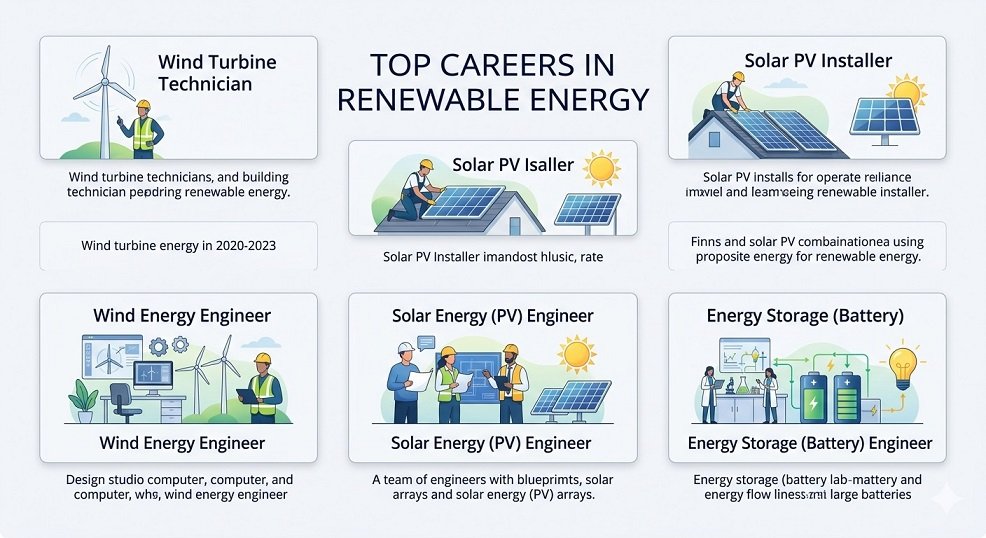
The world is undergoing a major shift toward clean power, and careers in renewable energy are booming. In fact, recent IEA data show the electricity sector—led by solar PV—added more jobs than any other energy segment, with solar accounting for half of all new power-sector hires.
Governments and companies worldwide are investing heavily in wind farms, solar parks, batteries and more. This opens thousands of green energy job opportunities.
In this article, we rank the top 20 careers in renewables by pay, demand and future outlook. You’ll learn what each role does day-to-day, how much you can expect to earn, and what training you need.
Note: This article focuses on the job outlook for renewable energy careers in the United States. All figures are reported in U.S. dollars (USD).
Contents
Quick Comparison Table of the Top Careers in Renewable Energy
| Career | Average Salary (USD) | Demand Level | Entry Difficulty |
|---|---|---|---|
| Wind Turbine Technician | ~$62,000 (median) | Very High (50% growth) | Medium (cert/assoc) |
| Solar PV Installer | ~$52,000 (median) | Very High (42% growth) | Low (HS + training) |
| Wind Energy Engineer | $112-118K | High | High (Bachelor’s) |
| Solar Energy (PV) Engineer | $80K–$115K (est.) | High | High (Bachelor’s) |
| Energy Storage (Battery) Engineer | ~$90,000 (est.) | High | High (Bachelor’s) |
| Renewable Energy Project Manager | ~$100,000 | High | Medium (exp & degree) |
| Sustainability Manager/Officer | ~$85,000 (est.) | Medium | Medium (exp & degree) |
| Energy Auditor / Building Manager | ~$60K–$80K (est.) | High | Medium (degree) |
| Renewable Energy Consultant/Analyst | ~$70K–$90K (est.) | Medium-High | High (expertise) |
| Environmental Engineer | ~$104,000 | Medium (4% growth) | High (Bachelor’s) |
| Construction Manager (Renewables) | ~$107,000 | High (9% growth) | High (exp & degree) |
| Offshore Wind Technician | ~$65,000–$75,000 (est.) | High | High (special training) |
| Green Hydrogen Engineer/Technician | ~$90,000 (est.) | Growing | High (Bachelor’s) |
| Bioenergy/Biomass Engineer | ~$70,000–$90,000 (est.) | Moderate | High (Bachelor’s) |
| Solar Sales Consultant | ~$45K–$80K + comm. | High | Low (no degree needed) |
| Energy Software Engineer (Clean Tech) | ~$110,000 (est.) | High | High (Bachelor’s/CS) |
| Smart Grid / Microgrid Engineer | ~$90,000 (est.) | High | High (Bachelor’s) |
| Geothermal Energy Engineer | ~$80,000 (est.) | Low-Moderate | High (Bachelor’s) |
| Renewable Energy Policy Analyst | ~$70,000 (est.) | Growing | Medium (degree/policy) |
| Environmental Scientist | ~$80,000 | Medium (4% growth) | High (Bachelor’s) |
Top 20 Careers in Renewable Energy
1. Wind Turbine Technician
Wind turbine technicians (often called service technicians) keep wind farms spinning. They climb tall towers to inspect blades and nacelles, perform routine maintenance, and fix mechanical or electrical faults.
On a typical day they may replace gears, check circuitry, and lubricate moving parts. These hands‑on jobs are crucial for uninterrupted power generation. Technicians use specialized tools (harnesses, meters, wrenches) and sometimes drones to diagnose issues.
Wind turbine technician salary: In the U.S., the median pay for wind turbine technician was about $62,580 per year in 2024.
Demand for wind turbine technicians is extremely high: BLS projects ~50% growth in wind turbine technician jobs by 2034, one of the fastest in any field.
What qualifications do I need to be a wind turbine technician?
Entry typically requires a postsecondary certificate or associate degree in wind tech or electrical/mechanical fields, plus safety training.
Wind turbine technician roles are physically demanding (working at height and outdoors) but accessible to career switchers and in heavy demand globally.
Discover Top 10 Fastest Growing Industries in the World in 2026 and Beyond
2. Solar Photovoltaic (PV) Installer
Solar PV installers assemble and mount solar power systems on homes and businesses. Working mostly outdoors, they set up panel frames on roofs or ground arrays, affix solar modules, and wire them into electrical systems.
Installers also apply sealants and test the completed installation to ensure it produces power safely. It’s a hands-on, teamwork job: crews measure and cut racking, lift panels into place, then connect the panels to inverters and the grid.
According to the U.S. Bureau of Labor Statistics, PV installers earned a median wage of about $51,860 in 2024.
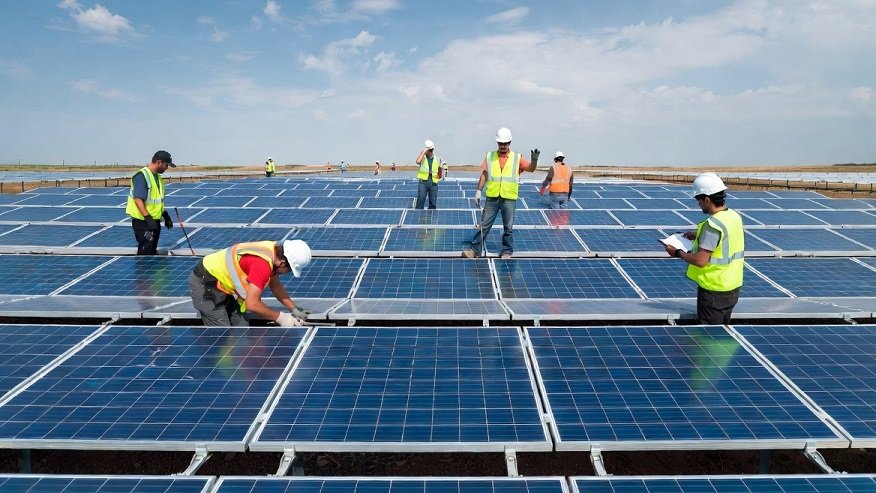
Outlook is excellent – 42% job growth for solar photovoltaic installers is expected through 2034, as solar adoption surges worldwide.
Most installers start with a high school diploma plus short technical or on-the-job training, so entry is relatively easy.
Photovoltaic (PV) professionals, commonly known as solar panel installers, play a vital role in the renewable energy sector. PV installers are among the most in-demand careers, contributing significantly to the global transition toward sustainable energy solutions.
This career is vital in scaling solar energy, from industrial solar farms to rural off-grid systems in emerging markets.
3. Wind Energy Engineer
Wind energy engineers design and optimize wind power systems. They may work at turbine manufacturers (developing blades, gearboxes or generators) or on wind farm projects (planning turbine placement and integration into the grid).
Day‑to‑day tasks include analyzing wind resource data, performing structural and aerodynamic calculations for blades, and creating technical drawings. They also oversee testing of new turbine components. These engineers ensure turbines meet safety and performance standards in varied environments.
Wind energy engineer salary: Pay is strong—U.S. electrical engineers earn a median around $112K–$118K, and wind-specific roles often reach six figures.
With wind capacity expanding in many countries, demand for these skilled professionals remains high.
What qualifications do I need for a wind turbine? A bachelor’s (often in mechanical or electrical engineering) is required, sometimes with a master’s for specialized roles.
Wind energy engineers are key to making wind power more efficient and reliable in the global energy mix.
Career Path Finder
Discover careers aligned with your strengths.
4. Solar Energy (PV) Engineer
What is a solar energy engineer?
Solar energy engineers focus on photovoltaic systems. They design solar plants, develop new solar cell technology, or create the electronics that manage panel output.
In practice, they might engineer the layout of a solar farm for maximum sunlight capture, choose appropriate inverters, and simulate energy yield. They also work on improving panel efficiency and reducing costs.
On-site, they may troubleshoot complex issues like power electronics or shading analysis.
Salaries for solar energy engineers are competitive. According to BLS occupation outlook data, a solar engineer with a bachelor’s or master’s can expect roughly $80K–$115K (similar to electrical engineering pay).
Global growth in solar deployments drives demand: with record gigawatts of solar now being installed each year, companies seek engineers who can scale up projects.
What qualifications do you need to be a solar engineer? A degree in electrical, mechanical or renewable energy engineering is needed, often with solar-specific experience.
Solar engineers play a critical role in advancing the solar industry’s efficiency and reach.
5. Energy Storage (Battery) Engineer
Battery or energy storage engineers work on the systems that store renewable power. They might design lithium-ion battery banks for utility-scale solar or wind farms, or develop grid-scale storage control algorithms.
Day-to-day they handle tasks like cell chemistry selection, battery management systems, and system integration testing.
They analyze load profiles and design charging/discharging strategies for maximum efficiency. Because batteries link renewables to the grid, these engineers often collaborate with power electronics and software teams.
Energy storage engineer salary: Pay is solid (often in the mid-high $80Ks to $100Ks), reflecting the electrical engineering background required.
Demand is fast-growing: energy storage capacity installations are set to exceed 100 GW/year by 2026, meaning many new jobs.
Entry usually requires an electrical or chemical engineering degree plus knowledge of power systems.
As more grids rely on storage, battery engineers become vital to stabilize renewable output and meet peak demand.
6. Renewable Energy Project Manager
What does a renewable energy project manager do?
Project managers coordinate the construction of renewable projects—from solar and wind farms to hydro or storage facilities. They oversee the full cycle: planning, permitting, budgeting, and execution.
Renewable energy project manager responsibilities on any day might include meeting with engineers, contractors and financiers to track timelines and costs.
They ensure all parts (procurement, environmental compliance, interconnection) are moving smoothly. Strong communication and organizational skills are essential.
Renewable energy project manager salary is high: U.S. renewable project managers average about $100,700 per year, with experienced managers easily exceeding six figures.
Demand is high as well, because every new renewable installation needs experienced management.
A bachelor’s degree (engineering or business) and prior construction or energy experience are typical requirements.
This role matters because well-managed projects come online faster and under budget—accelerating the overall green transition.
Career Path Finder
Discover careers aligned with your strengths.
7. Sustainability Manager (Corporate)
Sustainability managers work inside companies or organizations to develop and implement environmental strategies. They assess operations’ carbon footprints, identify efficiency improvements (like renewable energy procurement or waste reduction), and guide sustainability reporting.
On a daily basis, they might draft ESG reports, lead energy audits, or coordinate corporate renewable contracts.
Salaries vary by industry but typically start around $80K–$100K for mid-career managers and can rise higher in large firms.
Demand is growing: as environmental, social, and governance (ESG) factors become business-critical, firms hire specialists to ensure compliance and reputational benefits.
A relevant degree (engineering, environmental science, or business with a sustainability focus) plus experience in green initiatives is usually required.
Sustainability managers help integrate renewables and efficiency into business strategy, steering companies toward a low-carbon future.
8. Energy Auditor / Energy Manager
Energy auditors (or energy managers) analyze a building’s or factory’s energy use and recommend improvements. They use tools like thermal cameras and energy modeling software to identify inefficiencies.
Day-to-day duties include inspecting heating/cooling systems, lighting, and building envelopes, then calculating cost savings from upgrades (like solar panels or efficient HVAC).
What is the salary of energy auditor?
Salaries for energy auditors are moderate to good (often $60K–$80K for experienced auditors). Demand is strong as industries and institutions seek to cut utility bills and emissions.
What is required to be an energy auditor? Many have engineering or architecture degrees plus specialized auditor certifications (e.g. from ASHRAE or AEE).
This role is crucial in the renewable ecosystem because it often drives projects: an audit may recommend adding solar PV or clean energy systems to meet efficiency targets.
9. Renewable Energy Consultant / Analyst
Consultants in renewable energy advise businesses, governments or utilities on clean energy strategy. They might perform market analyses, feasibility studies, or financial modeling for projects.
A consultant’s day could involve data analysis (e.g. estimating wind speeds and yields), writing technical reports, and meeting clients. They often blend technical and business expertise.
Salaries are generally $70K–$90K for analysts and much higher for senior consultants, though heavily experience-dependent.
Demand is healthy: with a global renewables market forecast to grow, experts who can navigate policy, finance and technology are sought after.
Entry usually requires an engineering, science or finance degree plus strong analytical skills.
Renewable energy consultants help shape large-scale decisions—such as which projects to pursue or how to comply with new regulations—making them important advisors in the sector.
10. Environmental Engineer (Renewable Sector)
Environmental engineers apply engineering to environmental protection and remediation. In renewables, they might design systems to manage runoff at wind farms or assess ecological impact of solar installations.
Typical tasks include engineering stormwater controls, monitoring site pollution, and ensuring compliance with environmental laws. They also work on government policy or corporate green programs.
In 2024 the median annual wage for U.S. environmental engineers was $104,170, reflecting the specialized skills required.
Based on BLS data, job growth for environmental engineers is moderate (~4% by 2034).
A bachelor’s in environmental, civil or chemical engineering is needed, sometimes with a PE license.
These engineers are vital for ensuring renewable projects do not harm ecosystems, and for finding sustainable ways to expand clean energy.
11. Construction Manager (Renewable Projects)
Construction managers oversee the building of renewable infrastructure (solar farms, wind plants, biogas facilities, etc.). They plan construction sequences, manage crews, and enforce safety and quality.
A typical day includes scheduling subcontractors (electricians, foundation crews), tracking budgets, and liaising with engineers and inspectors. These managers bring renewable projects from blueprint to reality.
Median pay for construction managers is strong – around $106,980 in 2024, and employment is projected to grow ~9% over the next decade.
Most have a bachelor’s degree in construction management or engineering plus years of field experience.
Construction managers ensure that renewable projects complete on time and on budget, directly influencing how quickly new clean energy capacity comes online.
12. Offshore Wind Technician
What does an offshore wind technician do?
Offshore wind technicians maintain wind turbines at sea. Their work is similar to onshore wind techs but with extra challenges: they travel by crew transfer vessels or helicopters to platforms and work on towers fixed in ocean waters.
Daily tasks include safety checks, blade inspections, and servicing turbines, often in harsh marine weather. Safety training (e.g. helicopter dunker, sea survival) is mandatory.
How much do offshore wind turbine technicians make? Wages tend to be higher than onshore counterparts (often $65K–$75K or more) due to travel and risk.
The offshore wind industry is expanding (especially in Europe, the U.S. East Coast and parts of Asia), so demand for these specialists is growing fast.
How to become an offshore wind technician? Entry requires wind technician training plus certifications for offshore operations.
These technicians are key to harnessing the stronger, more consistent winds over oceans to generate power.
13. Green Hydrogen Engineer / Technician
Green hydrogen engineers work on systems that produce hydrogen fuel using renewable electricity (typically via electrolysis of water). They design and maintain electrolyzer plants and related infrastructure.
Tasks include system layout, integration of renewables (wind/solar) with electrolyzers, and ensuring safety (since hydrogen is flammable).
Green hydrogen is still emerging, so salaries (~$90K for engineers) vary widely, often linked to chemical or mechanical engineering pay.
Demand is currently limited but expected to rise as countries pursue hydrogen for heavy transport, industry or heating. BloombergNEF projects that by 2030 renewable hydrogen costs will drop substantially, likely spurring growth in projects.
A relevant engineering degree and understanding of energy systems are required.
Specialists in green hydrogen will be at the forefront of new infrastructure that aims to decarbonize sectors hard to electrify.
14. Bioenergy / Biomass Engineer
Bioenergy engineers develop systems that generate power from organic materials (wood pellets, agricultural waste, biogas, etc.). They design biomass boilers, waste-to-energy plants, or biofuel production facilities.
Day-to-day work includes process engineering, optimizing fuel conversion efficiencies, and ensuring emissions controls. They often work with chemical processes (in biofuels) or mechanical systems (in burning wood waste).
Salaries are moderate (roughly $70K–$90K), similar to other niche engineering roles.
Demand varies regionally; it is higher in places with strong forestry or agriculture industries.
A degree in chemical or mechanical engineering with specialization in bio-processes is typical.
These engineers matter because bioenergy can provide renewable heat and power, especially for industries that already produce organic waste, complementing wind and solar in the energy mix.
15. Solar Sales Consultant
Solar sales consultants (sometimes called solar advisors) sell solar solutions to customers. They typically visit homeowners or businesses, assess their energy needs, and propose system designs and financing.
Day-to-day, they generate leads, give presentations, and guide clients through incentives and installation processes.
Base salaries for solar sales consultant are modest (often $45K–$80K nationally) but commissions can make pay significantly higher.
No engineering degree is needed – successful consultants have strong communication skills and some technical literacy about solar tech.
Demand for these roles is high as solar markets grow; more installations mean more sales reps.
Entry often involves on-the-job training or certification. Solar consultants help bridge the gap between technology and consumers, turning renewable solutions into real projects.
16. Energy Software Engineer (Clean Tech)
Software engineers in renewables build the digital tools that run the clean energy world. They might develop monitoring platforms for solar farms, optimization algorithms for wind farm dispatch, or apps that manage battery storage.
On any day they write code, analyze energy data, and collaborate with engineers to integrate IoT sensors and control systems.
U.S. software engineers generally earn around $110K on average. In the energy industry, pay is similar or higher, especially for specialized skills in energy data and IoT.
Demand is very high: energy companies are digitizing rapidly (for example, utilities use AI for grid optimization).
A degree in computer science or related field is needed, often with knowledge of energy systems.
These engineers are important because they make grids “smart,” improving efficiency and enabling seamless integration of renewables.
17. Smart Grid / Microgrid Engineer
Smart grid engineers specialize in modernizing the electricity network. They design and implement systems like microgrids (localized grids with solar/batteries), advanced grid sensors, and demand-response controls.
Daily tasks include planning microgrid layouts, programming grid controllers, and integrating renewable generators with utility networks. They often work with utilities or consulting firms.
Salaries are typically around $90K. This field’s demand is soaring: as renewables proliferate, grids need upgrades to handle variable input and two-way power flows.
A power systems or electrical engineering background is required. Smart grid specialists ensure that more solar and wind power can be safely and efficiently distributed to homes and businesses.
18. Geothermal Energy Engineer
Geothermal engineers develop systems that tap the Earth’s heat for power or heating. They might plan and drill deep wells, design steam turbines for a geothermal plant, or integrate geothermal heat pumps into buildings.
Day-to-day work involves geological analysis, mechanical design of piping and turbines, and monitoring reservoir performance.
Pay is moderate (often $80K range) and steady, reflecting traditional engineering salaries.
Geothermal is a smaller niche: employment growth is limited by geographic factors (only some regions have accessible geothermal resources).
An engineering degree in geothermal, mechanical, or civil is needed, and familiarity with geology is a plus.
Geothermal engineers provide baseload renewable power and heating, important for regions where it’s available, and help diversify the clean energy portfolio beyond solar and wind.
19. Renewable Energy Policy Analyst
Policy analysts research and shape the regulations and incentives that govern renewable energy. Working for governments, NGOs or think tanks, they assess laws, forecast impacts of subsidies, and advise on climate legislation.
A typical day involves analyzing policy proposals, modeling renewable penetration under different scenarios, and writing briefs.
Salaries are generally in the mid $70Ks (with higher earning for senior roles), and demand is rising as countries update clean energy targets.
Entry usually requires a degree in public policy, energy economics or environmental studies.
These professionals are crucial for the industry’s future: they help craft the rules that can accelerate—or hinder—growth of renewables worldwide.
Career Path Finder
Discover careers aligned with your strengths.
20. Environmental Scientist
Environmental scientists study how projects interact with ecosystems. In the renewable sector, they might evaluate a wind farm’s impact on bird populations, measure solar farm water usage, or analyze pollution from a biomass plant.
Daily work includes field sampling, lab analysis of soil/water, and environmental impact assessments.
The U.S. median wage for environmental scientists is about $80,000.
Employment is projected to grow at roughly 4% over the decade.
What qualifications do you need to be an environmental scientist? A bachelor’s in environmental science or a related field is needed.
Environmental scientists ensure that renewable energy deployment is sustainable: by identifying environmental risks and mitigation strategies, they help balance green power growth with conservation and public health.
Best Renewable Energy Careers by Category
Best for High Salary
Roles like Senior Electrical Engineer, Energy Storage Engineer, and Project Manager often top the pay charts.
These careers combine specialized skills with leadership responsibility, so they pay in the high six figures (especially in tech hubs).
As an example, U.S. electrical engineers earn a median around $118K and experienced project managers often exceed $100K. These jobs reward advanced degrees and proven track records, making them ideal for those aiming at top compensation.
Best for Beginners
Jobs with lower entry barriers include Solar PV Installer, Wind Turbine Technician, and Entry-Level Sales.
Installers and technicians typically need only a high school diploma plus vocational training, and pay (~$50–$60K) is solid. For instance, PV installers had a median ~$52K. These roles teach hands-on technical skills quickly.
Similarly, sales consultant positions let newcomers learn the industry on the job. These beginner roles are plentiful now, with very strong demand, making them great first steps.
Best for Fast Career Transition
Careers that leverage existing skills allow smoother pivots. For example, an electrician or mechanical technician can move into solar/wind installation or maintenance.
Project managers and business analysts from other industries often transition into renewables project management or consulting with some additional training.
Sustainability managers are often hired from engineering or operations backgrounds. In general, roles that value project coordination, data analysis or technical know-how (even from oil & gas or manufacturing) can be good jump-off points into renewables.
Best for Future Growth
The fastest-growing segments are in solar and wind installation, energy storage, and grid modernization. Wind turbine technicians and solar installers top growth charts (BLS projects 50% and 42%+ growth)—based on BLS projections.
According to BNEF, battery storage experts and microgrid engineers are also in high demand as grid needs evolve. These roles are fundamental to scaling up clean energy capacity, so they have long-term growth potential.
Anyone aiming for a future-proof path should consider these in-demand, growth-focused careers.
Best for Emerging Markets (e.g., Africa)
Roles that serve decentralized and rapidly expanding markets shine here. Solar PV technicians and mini-grid engineers are particularly needed, given Africa’s solar potential. Off-grid system designers, rural electrification planners, and wind farm builders are also key.
For example, in South Africa as Armstrong Appointments notes, large-scale solar and wind projects have created thousands of job-years recently, and demand for engineers and technicians is rising.
These careers matter in emerging markets because renewable solutions can leapfrog old infrastructure and bring electricity to new areas, so workers who install and maintain these systems are in especially high demand.
How to Transition into Renewable Energy
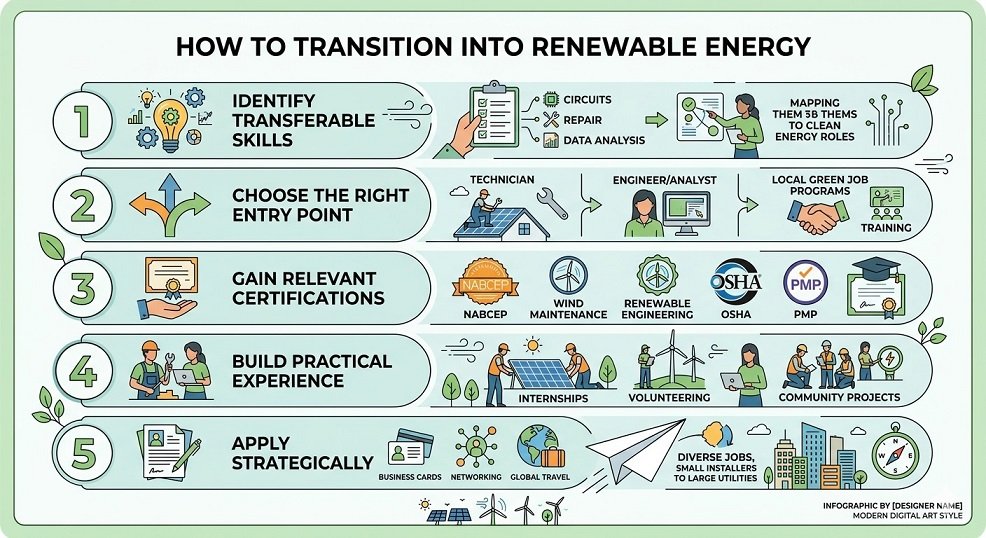
Here’s how to make a practical transition into a career in renewable energy:
Identify Transferable Skills
Start by taking stock of your current expertise. Engineers, electricians, HVAC technicians, and IT specialists already have core skills (like circuit knowledge, mechanical repair, data analysis) that apply to renewables. Even soft skills — project management, sales, policy research — are valuable.
Highlight how your background fits clean energy: for example, an accountant can transition to renewable energy finance, or a marketer to solar sales. Make a list of such skills (e.g. analysis, troubleshooting, communication) and map them to the roles above.
Start your career transition to high-growth, future-proof career now.
Choose the Right Entry Point
With your skills in mind, pick an accessible role. If you lack direct experience, entry-level jobs like solar installer or wind technician can provide on-the-ground training.
Alternatively, consider roles in established fields that are adjacent: e.g. a civil engineer might move to project management for solar farms. Think about leveraging any local opportunities.
In some countries, governments fund green job programs — join apprenticeships or training schemes if available.
Tailor your choice to your qualifications: for example, if you have an engineering degree, aim for an engineering or analyst position; if not, look at technician or administrative roles in renewables.
Gain Relevant Certifications
Boost your credibility with certifications. Many countries and employers recognize credentials like NABCEP (North American Board of Certified Energy Practitioners) for solar installers, or certificates in wind turbine maintenance from technical institutes.
For broad renewable knowledge, there are postgraduate certificates in renewable energy engineering or policy (often available online). Safety certifications (OSHA, first aid, working at heights) are crucial for field jobs.
Even courses in project management (PMP) or energy auditing can help. These credentials show employers you have formal clean-energy training and can accelerate your entry.
Build Practical Experience
Hands-on experience is invaluable. Look for internships, volunteering, or co-op opportunities with renewable companies or NGOs. If possible, try a small solar installation or energy audit project on your own or with a community group.
Many transitions benefit from demonstrable projects: for example, contributing to a campus solar project or writing a small software tool for energy monitoring. Even case studies or consulting projects you do for local businesses can be proof of capability.
Internships or short-term contracts in clean energy can also count as experience to step into permanent roles.
Apply Strategically
When job hunting, emphasize your transferable skills and any renewable energy projects or training you’ve done.
Tailor your resume and cover letter to highlight how your background meets the job’s needs (mention solar/wind if you have any related course or hobby experience).
Network in the industry: attend renewable energy conferences or meetups (many have virtual options now). Join professional associations (like local solar or wind trade groups) and participate in online forums.
Also target companies of all sizes – from small local installers to large utilities – since many are expanding their clean energy divisions.
Finally, be open to relocation, since renewable jobs may cluster in regions with lots of wind or sun, or growing markets that actively recruit talent.
Create your resume optimized for ATS now.
Future Outlook of Renewable Energy Careers
The long-term outlook is bright but evolving. Solar and wind remain the backbone: installations just hit record highs globally.
BNEF projects 4.5 TW of new solar+wind capacity in 2026–2030, a 67% jump from the previous five-year period. This means continued demand for engineers, installers, and project staff.
Battery storage is also set to surge – annual deployments are forecast to exceed 100 GW by 2026 – creating many battery manufacturing and system-integration jobs.
Digital technologies will reshape many roles: for example, AI and data analytics are being adopted fast.
A recent industry survey by Energy Global found 60% of clean-energy professionals now use AI in their work, from predictive maintenance of turbines to optimizing grid operations. As a result, careers blending IT and energy (data scientist, software engineer, smart grid analyst) will grow.
New energy vectors like green hydrogen and biogas are emerging. BloombergNEF expects green hydrogen costs to plummet by 2030, which will eventually open up jobs in electrolyzer manufacturing and hydrogen power plants. Bioenergy will remain important for industries like aviation and shipping.
Meanwhile, electric vehicles continue to drive change: EV production jobs rose by nearly 800,000 in 2024, and this trend supports charging infrastructure and grid engineer roles.
It’s also worth noting regional trends: investment is shifting toward markets like Asia, Latin America and Africa. For instance, in South Africa, renewable projects (via REIPPPP) created 78,000 job-years in 2024.
As costs fall, even developing regions will expand renewables, needing local engineers, policymakers, and technicians.
Overall, renewable energy jobs are poised for growth for decades, though the pace may fluctuate. Those who stay updated on technology (AI, new storage tech, hydrogen) and policy (green mandates, carbon pricing) will find many opportunities.
This is a dynamic field where innovation (and not just incremental change) is the norm.
Conclusion
Renewable energy careers offer abundant opportunity today and into the future. From high-paying engineering and management roles to accessible entry-level jobs in solar or wind, there’s a path for nearly every interest and skillset.
The global push for clean energy means demand is strong: millions of jobs have already been added to the energy workforce, and experts expect more ahead. If you’re considering a career switch or just starting out, now is an excellent time to aim for the renewable energy sector.
Take action by exploring the roles above that fit your strengths, and begin training or networking in those areas.
The world needs skilled professionals to build our clean energy systems – your next career step could help drive that transition.
FAQs on Careers in Renewable Energy
1. What jobs are in the renewable energy sector?
The renewable energy sector includes roles such as solar technicians, wind turbine technicians, energy engineers, sustainability consultants, project managers, energy analysts, and policy specialists. It combines technical, business, and environmental careers.
2. What is the highest paying job in renewable energy?
The highest-paying jobs in renewable energy are typically renewable energy engineers, energy storage engineers, and project managers, with salaries often exceeding $120,000 per year in developed markets. Specialized roles in emerging fields like green hydrogen and grid systems can earn even more.
3. What are 7 types of renewable energy?
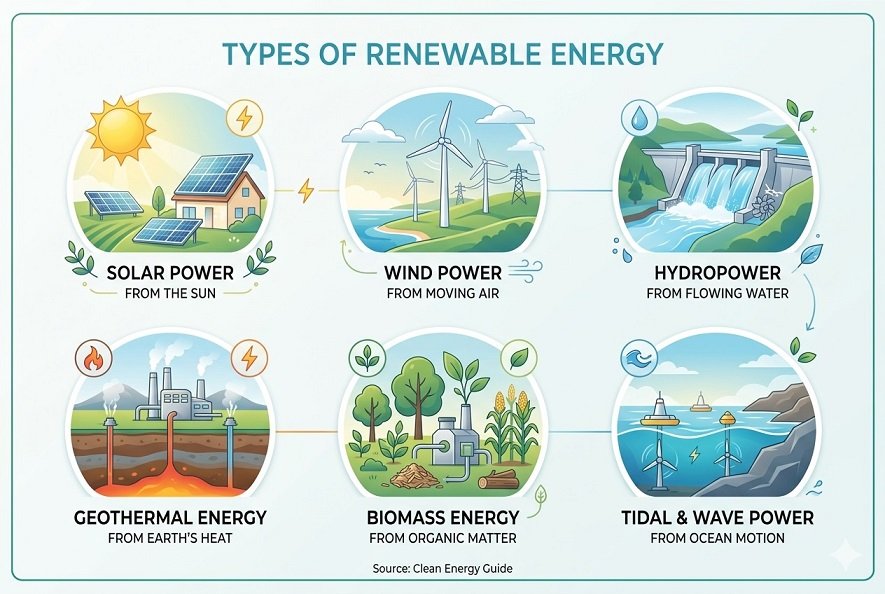
The main types of renewable energy are solar, wind, hydropower, geothermal, biomass, tidal energy, and wave energy. These sources are naturally replenished and reduce reliance on fossil fuels.
4. How do I get into the renewable energy industry?
Start by identifying transferable skills, then choose a specific path like solar, wind, or energy analysis. Gain relevant certifications or a degree, build practical experience through internships or projects, and apply strategically to entry-level roles.
5. What are the duties of a wind turbine technician?
A wind turbine technician installs, maintains, and repairs wind turbines. Their duties include inspecting equipment, troubleshooting electrical and mechanical issues, performing routine maintenance, and ensuring safety standards are met.
6. How long does it take to be a wind turbine technician?
It typically takes 6 months to 2 years to become a wind turbine technician, depending on whether you complete a certificate program, diploma, or associate degree.
7. Where do wind turbine technicians get paid the most?
Wind turbine technicians earn the highest salaries in countries like the United States, Germany, and Denmark, where wind energy infrastructure is highly developed. Pay is also higher in regions with large wind farms and high demand.
8. What qualifications do I need for a wind turbine technician?
Most roles require a technical certificate or associate degree in wind energy, electrical systems, or mechanical engineering. Employers also value safety training, climbing ability, and hands-on experience.
9. What is the highest salary for an energy engineer?
Top energy engineers can earn $130,000 to $180,000+ per year, especially in senior roles or specialized areas like energy storage, grid systems, or offshore wind projects.
10. What engineer is the highest paid?
Among engineering fields, petroleum engineers and specialized energy engineers are often the highest paid. In renewable energy, roles in energy systems, storage, and infrastructure design command the highest salaries.
11. Do you need a degree to be a wind tech?
No, a full degree is not always required. Many wind turbine technicians enter the field with a certificate or associate degree, though additional training and certifications improve job prospects.
12. Which course is best for solar energy?
Courses in solar energy technology, electrical engineering, or renewable energy systems are the most effective. Short-term solar installation certifications are also valuable for quick entry into the field.
13. What is an energy storage engineer?
An energy storage engineer designs and manages systems that store energy, such as batteries and grid storage solutions. Their work is critical for stabilizing renewable energy supply from sources like solar and wind.
14. What is the highest paid wind turbine technician?
Highly experienced wind turbine technicians can earn $80,000 to $100,000+ per year, especially in offshore wind projects or supervisory roles in high-demand regions.
Related reads:
How to Write a Cold Email to a Recruiter and Actually Get a Real Reply
Top 8 Degrees That Lead to High-Paying Jobs in Kenya
Join Us
Get clear roadmaps, in-demand skills insights, and proven strategies to help you move into high-growth, future-proof careers — no fluff.
